










Introduzione
La scelta della dimensione corretta del trasformatore è una delle decisioni più importanti nella progettazione di un impianto elettrico. Un trasformatore sottodimensionato può causare surriscaldamento, cadute di tensione e guasti alle apparecchiature, mentre un trasformatore sovradimensionato può comportare inutili costi di investimento e maggiori perdite a vuoto.
Per gli ingegneri, gli appaltatori e i gestori di impianti industriali, comprendere come calcolare la capacità del trasformatore (kVA) è essenziale per garantire una distribuzione di energia affidabile ed efficiente.
In questa guida vengono spiegate le formula di dimensionamento del trasformatore, metodi di calcolo, esempi reali e considerazioni pratiche utilizzati nei sistemi di alimentazione industriali e commerciali.
Che cos'è il valore kVA del trasformatore?
La capacità di un trasformatore è tipicamente espressa in kVA (kilovolt-ampere) piuttosto che in kW.
Questo perché i trasformatori forniscono potenza apparente, che comprende entrambi:
Potenza attiva (kW) - la potenza reale utilizzata dalle apparecchiature
Potenza reattiva (kVAR) - potenza richiesta da carichi induttivi come i motori
La relazione tra loro è determinata dalla fattore di potenza (PF).
Formula di potenza
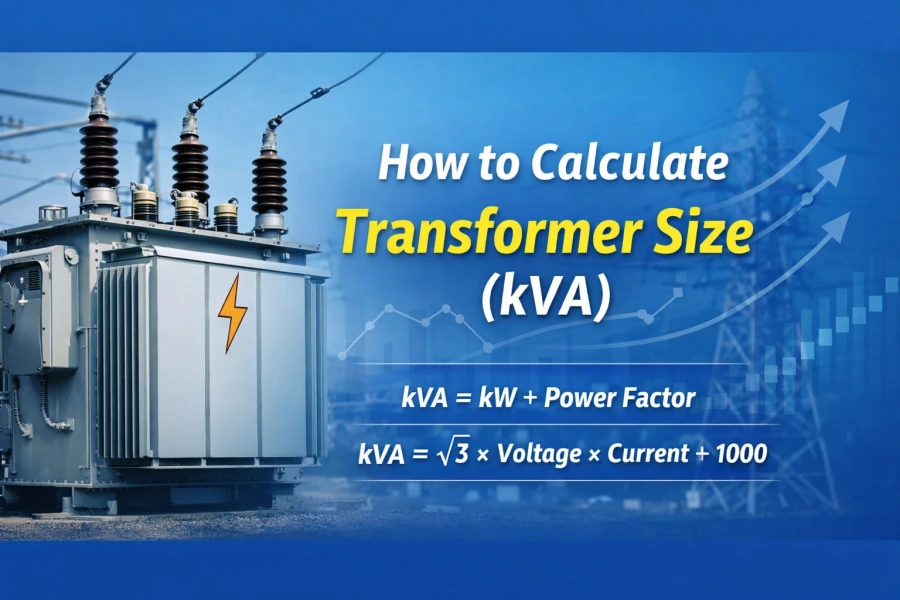
kVA = kW ÷ Fattore di potenza
Ad esempio:
Carico = 100 kW
Fattore di potenza = 0,8
Dimensioni del trasformatore richieste:
kVA = 100 ÷ 0,8 = 125 kVA
In pratica, gli ingegneri selezionano di solito il il valore nominale del trasformatore standard successivo, come ad esempio 150 kVA.
Formula di dimensionamento del trasformatore di base
La capacità del trasformatore può essere calcolata anche in base alla tensione e alla corrente.
Formula del trasformatore monofase
kVA = (Tensione × Corrente) ÷ 1000
Esempio:
Tensione = 240 V
Corrente = 100 A
kVA = (240 × 100) ÷ 1000
kVA = 24 kVA
Formula del trasformatore trifase
Per i sistemi industriali si utilizzano comunemente trasformatori trifase.
kVA = (√3 × Tensione × Corrente) ÷ 1000
Esempio:
Tensione = 480 V
Corrente = 120 A
kVA = (1,732 × 480 × 120) ÷ 1000
kVA ≈ 99,8 kVA
Pertanto, un Trasformatore da 100 kVA di solito viene selezionata.
Esempio: Calcolo del dimensionamento dei trasformatori industriali
Vediamo un esempio pratico.
Carico dell'impianto industriale
Carico totale collegato:
| Attrezzatura | Potenza |
|---|---|
| Motori | 80 kW |
| Illuminazione | 20 kW |
| HVAC | 40 kW |
| Attrezzatura | 30 kW |
Carico totale:
170 kW
Si ipotizza un fattore di potenza medio:
PF = 0,9
Calcolo della capacità del trasformatore
kVA = 170 ÷ 0,9
kVA = 188,9 kVA
In genere gli ingegneri aggiungono un 20-25% margine di sicurezza.
Dimensione del trasformatore consigliata:
250 kVA
Questo permette di avere spazio per:
fluttuazione del carico
corrente di avvio dell'apparecchiatura
espansione futura
Dimensioni standard dei trasformatori utilizzati nell'industria
La maggior parte dei produttori fornisce i valori nominali standard dei trasformatori.
Le dimensioni tipiche dei trasformatori di distribuzione comprendono:
| Applicazione | Dimensioni tipiche del trasformatore |
|---|---|
| Piccolo edificio commerciale | 45 - 75 kVA |
| Negozio al dettaglio | 75 - 150 kVA |
| Media struttura commerciale | 150 - 300 kVA |
| Impianto industriale | 300 - 1000 kVA |
| Grandi sistemi industriali | 1000 kVA - 5000 kVA |
La scelta del rating corretto assicura funzionamento efficiente e maggiore durata del trasformatore.
Sovradimensionamento e sottodimensionamento del trasformatore
Rischi dei trasformatori sottodimensionati
Se la capacità del trasformatore è troppo bassa:
surriscaldamento
degrado dell'isolamento
caduta di tensione
riduzione della durata di vita delle apparecchiature
possibile guasto al trasformatore
Si tratta di un problema comune negli impianti industriali in rapida espansione.
Problemi con i trasformatori sovradimensionati
Il sovradimensionamento presenta anche degli svantaggi:
costo di acquisto più elevato
aumento delle perdite a vuoto
minore efficienza ai carichi leggeri
Pertanto, la prassi migliore è quella di selezionare un trasformatore vicino al carico calcolato con un ragionevole margine di espansione.
Fattori che influenzano la scelta della capacità del trasformatore
Nella scelta delle dimensioni del trasformatore si devono considerare diversi fattori.
1. Tipo di carico
Carichi diversi si comportano in modo diverso.
Esempi:
motori
attrezzature per la saldatura
Sistemi HVAC
azionamenti a frequenza variabile
I carichi del motore spesso richiedono corrente di avviamento più elevata, che deve essere considerato durante il dimensionamento.
2. Espansione futura
Gli impianti industriali spesso si espandono nel tempo.
Gli ingegneri in genere riservano 20-30% capacità aggiuntiva per supportare le attrezzature future.
3. Temperatura ambiente
L'elevata temperatura ambiente riduce l'efficienza di raffreddamento del trasformatore.
I trasformatori all'aperto che operano in climi caldi possono richiedere capacità superiore o metodi di raffreddamento migliorati.
4. Carichi armonici
Le strutture moderne utilizzano molti dispositivi elettronici:
Sistemi UPS
centri dati
Azionamenti VFD
Questi creano distorsione armonica, che può aumentare il riscaldamento del trasformatore.
In questi casi, Trasformatori di classe K o di capacità superiore, può essere raccomandato.
5. Ciclo di lavoro
I carichi continui richiedono un dimensionamento del trasformatore più conservativo rispetto ai carichi intermittenti.
Ad esempio:
centri dati
linee di produzione
operazioni minerarie
Queste applicazioni spesso operano 24/7.
Scelta del tipo di trasformatore giusto
Dopo aver determinato la capacità del trasformatore, il passo successivo è la scelta del tipo di trasformatore appropriato.
Le opzioni più comuni includono:
Trasformatori montati su piastra
Utilizzato in:
edifici commerciali
distribuzione residenziale
parchi industriali
Vantaggi:
installazione a livello del suolo
design compatto
sicurezza migliorata
Trasformatori montati su palo
Comune in:
distribuzione di energia elettrica nelle zone rurali
linee elettriche aeree
Vantaggi:
basso costo di installazione
infrastruttura semplice
Trasformatori di sottostazione
Utilizzato in:
sottostazioni di servizio
centrali elettriche
grandi impianti industriali
Vantaggi:
alta capacità
capacità di alta tensione
Combinazioni tipiche di tensione del trasformatore
I trasformatori industriali utilizzano spesso le seguenti configurazioni di tensione:
| Tensione primaria | Tensione secondaria |
|---|---|
| 13,8 kV | 480V |
| 33 kV | 400V |
| 34,5 kV | 480V |
| 11 kV | 415V |
La configurazione esatta dipende dalla progettazione del sistema di distribuzione dell'energia.
Migliori pratiche per la selezione dei trasformatori
In genere gli ingegneri elettrici seguono questi passaggi:
Calcolo del carico totale collegato
Determinare la tensione del sistema
Calcolo della capacità kVA richiesta
Aggiungere un margine di sicurezza per l'espansione
Selezionare il tipo di trasformatore appropriato
Confermare l'ambiente di installazione (interno/esterno)
L'osservanza di questi passaggi aiuta a garantire distribuzione di energia sicura, affidabile ed efficiente.
Conclusione
Il corretto dimensionamento dei trasformatori è essenziale per garantire prestazioni affidabili del sistema elettrico. La scelta della giusta capacità del trasformatore aiuta a prevenire il surriscaldamento, a ridurre le perdite e a garantire la stabilità operativa a lungo termine.
Utilizzando il metodo corretto Formule di calcolo dei kVA, Valutando le caratteristiche del carico e considerando l'espansione futura, gli ingegneri possono selezionare il trasformatore ottimale per le applicazioni industriali e commerciali.
Come professionista trasformatore di potenza produttore, Yawei Transformer fornisce soluzioni di trasformazione personalizzate per progetti industriali e di pubblica utilità a livello globale, tra cui:
trasformatori di distribuzione
trasformatori montati su piastra
trasformatori su palo
trasformatori di sottostazione
Se avete bisogno di assistenza per la scelta del trasformatore più adatto al vostro progetto, il nostro team di ingegneri è pronto ad aiutarvi. assistenza tecnica e soluzioni personalizzate.