

A Complete Engineering Guide for Utilities, EPC Contractors & Industrial Buyers
Selecting the correct high voltage transformer is one of the most critical technical and financial decisions in any power project. Whether you are developing a utility substation, expanding an industrial facility, or integrating renewable energy into the grid, your transformer selection directly impacts:
-
System reliability
-
Capital investment
-
Operating costs
-
Energy efficiency compliance
-
Long-term return on investment
In this in-depth guide, we break down the three core selection factors — capacity, losses, and efficiency — and provide practical engineering insights to help you make the right decision.
As a global manufacturer, Yawei Transformer supports utilities and EPC contractors worldwide with customized high voltage transformer solutions. The insights below reflect real-world project experience.
1. What Is a High Voltage Transformer?
A high voltage transformer typically operates at primary voltages above 10 kV (such as 33kV, 66kV, 110kV and beyond). These transformers are essential in:
-
Industrial power systems
-
Renewable energy step-up stations
-
Mining and heavy industry
-
Data centers and infrastructure projects
Selecting the correct unit requires balancing electrical design, regulatory compliance, and lifecycle economics.
Read More:How Does a Transformer Work? A Complete Guide to Transformer Working Principle
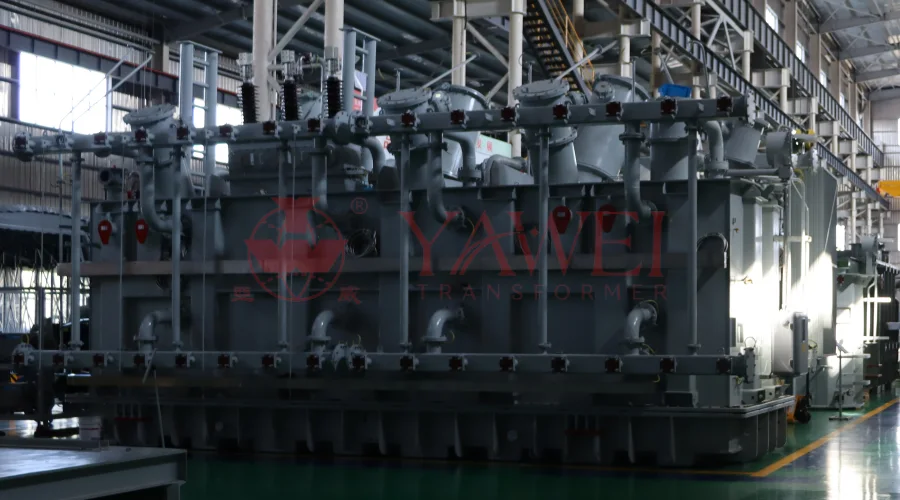
2. Capacity Selection: How to Determine the Correct MVA Rating
Improper sizing is one of the most common and costly mistakes in transformer procurement.
Risks of Undersizing
-
Overloading
-
Accelerated insulation aging
-
Reduced service life
-
Increased failure probability
Risks of Oversizing
-
Higher upfront investment
-
Increased no-load losses
-
Lower efficiency at partial load
Basic Sizing Formula (Three-Phase System)
S=P/Cosϕ
Where:
-
S = Apparent Power (kVA / MVA)
-
P = Real Power (kW / MW)
-
cosφ = Power factor
5 Key Engineering Factors to Consider
1️⃣ Future Load Growth
Plan for 15–30% expansion margin over 5–10 years.
2️⃣ Starting Current of Large Motors
Motor-driven systems may require 1.3–1.5 safety factor.
3️⃣ Ambient Temperature
High ambient conditions reduce effective capacity.
4️⃣ Altitude
Installations above 1000 meters require cooling correction.
5️⃣ Redundancy Design (N+1)
Critical facilities like data centers require backup capacity.
Recommended Engineering Safety Factors
| Application Type | Recommended Margin |
|---|---|
| General Industry | 1.2 × |
| Heavy Motor Loads | 1.3–1.5 × |
| Renewable Energy | 1.25 × |
| Data Centers | N+1 Design |
A properly sized transformer should operate optimally at 70–85% load under normal conditions.
Learn More:Transformer Components Explained: Core Parts and Their Functions in Power Systems
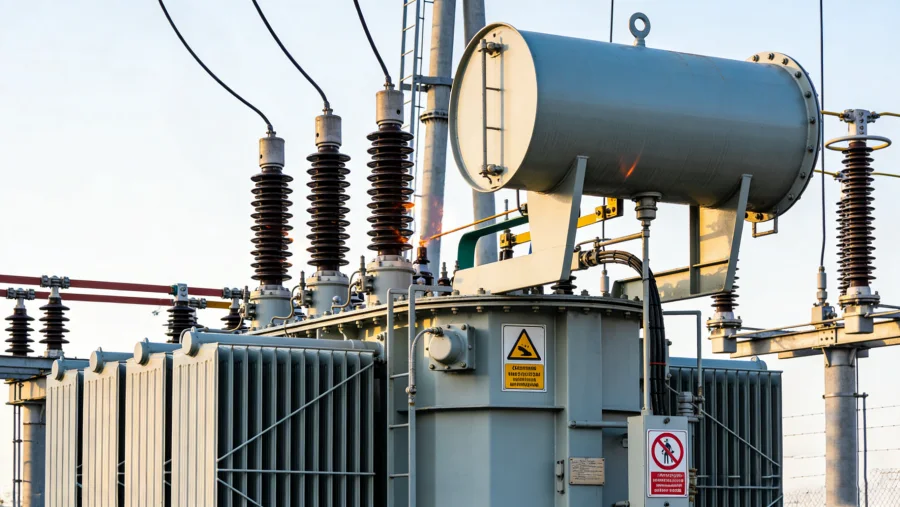
3. Understanding Transformer Losses: The Real Cost Driver
Transformer losses determine your lifetime operating cost.
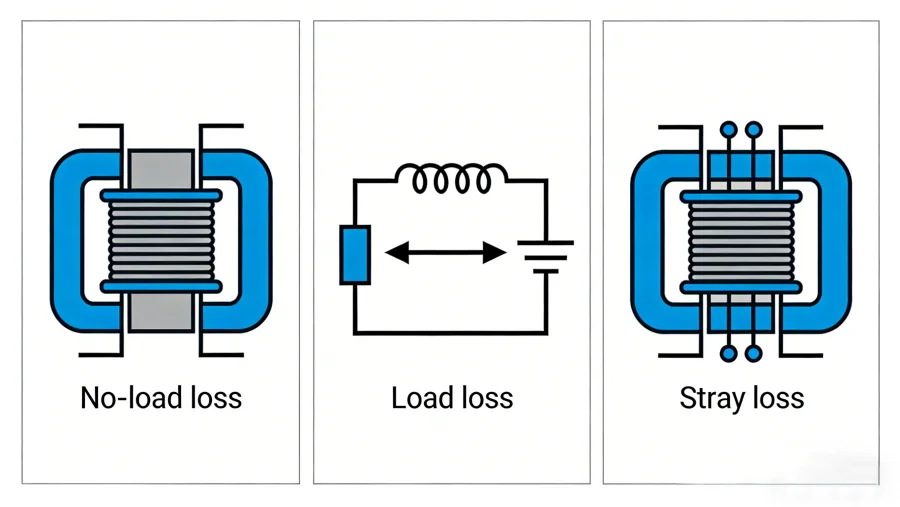
1️⃣ No-Load Loss (Core Loss)
-
Occurs whenever the transformer is energized
-
Independent of load
-
Caused by magnetic hysteresis and eddy currents
Ideal for systems operating continuously at low load levels.
2️⃣ Load Loss (Copper Loss)
-
Proportional to current squared (I²R)
-
Increases with load
-
Generated in windings
3️⃣ Stray Loss
-
Caused by leakage flux
-
More significant in large MVA units
Lifecycle Cost Example (20 Years)
Assume:
-
10 MVA transformer
-
8,000 operating hours/year
-
Electricity cost: $0.10/kWh
Reducing no-load loss by just 5 kW results in:
5 × 8000 × 20 = 800,000 kWh saved
Equivalent to:
$80,000 in energy savings
👉 Conclusion: A lower-loss transformer may offer far greater financial value than the lowest purchase price.
Read More:Types of Transformers Explained: Classification by Structure, Cooling, and Application
4. Efficiency Analysis: How to Evaluate Transformer Performance
Efficiency formula:
η=Output/(Output+Losses)
Typical high voltage transformer efficiency:
-
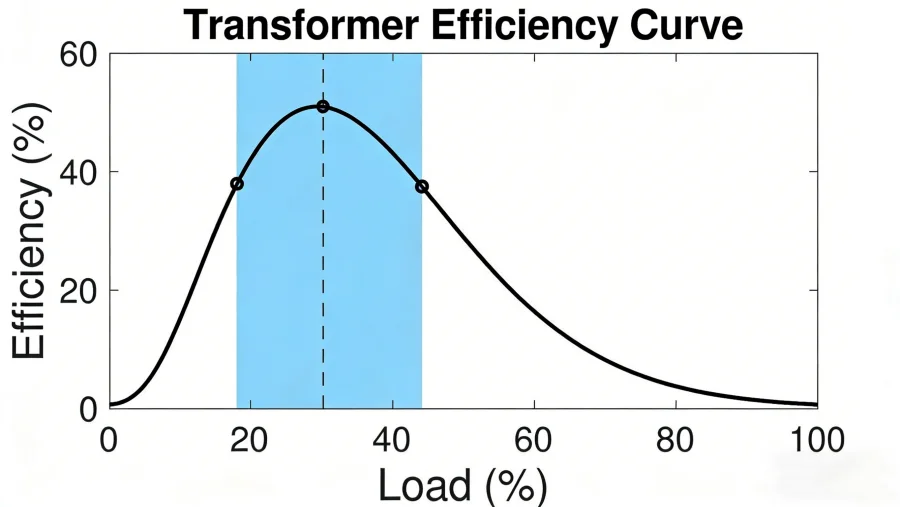
98% – 99.5% at full load
-
Peak efficiency at 60–80% load
Why Full Load Operation Is Not Ideal
Continuous full-load operation leads to:
-
Higher temperature rise
-
Faster insulation aging
-
Reduced lifespan
Optimal performance zone:
👉 70%–85% load
International Efficiency Standards
Depending on project location, compliance may include:
-
DOE (United States)
-
EcoDesign (Europe)
-
GB Standards (China)
International EPC projects must verify compliance before procurement.
Get More:What Is a Pad Mounted Transformer? A Complete Guide for Underground Power Distribution
5. Balancing Capacity, Losses & Efficiency
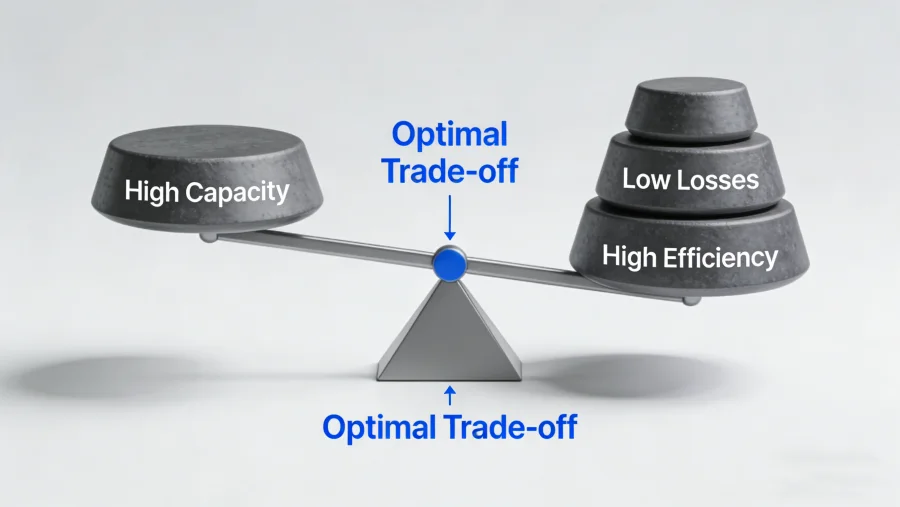
| Objective | Strategy |
|---|---|
| Lowest CapEx | Standard loss design |
| Lowest OpEx | Low-loss design |
| High reliability | Extra capacity margin |
| Renewable integration | Optimize part-load efficiency |
A professional manufacturer will help evaluate total cost of ownership (TCO), not just initial pricing.
6. Common Procurement Mistakes
❌ Selecting based solely on price
❌ Ignoring no-load losses
❌ Failing to plan future expansion
❌ Overlooking compliance standards
❌ Not calculating lifecycle cost
Successful projects evaluate:
Technical performance + Economic value + Long-term reliability
7. What Information to Provide When Requesting a Quotation
To receive an accurate technical proposal, prepare:
-
Rated capacity (kVA / MVA)
-
Primary & secondary voltage
-
Frequency (50Hz / 60Hz)
-
Impedance voltage
-
Cooling method (ONAN, ONAF, etc.)
-
Installation environment
-
Required efficiency standard
Providing complete technical data ensures faster and more accurate quotations.
8. Why Manufacturer Expertise Matters
High voltage transformers are 20–30 year assets. Supplier capability directly affects performance and reliability.
Look for manufacturers offering:
✔ Full routine & type testing
✔ High-grade silicon steel & copper
✔ Strict quality control systems
✔ International project references
✔ Engineering customization support
With decades of production experience, Yawei Transformer delivers engineered high voltage transformer solutions for utility and industrial applications worldwide.
Final Thoughts: Smart Transformer Selection Strategy
Choosing the right high voltage transformer is not simply about selecting an MVA rating. It requires:
-
Accurate capacity calculation
-
Detailed loss analysis
-
Efficiency curve evaluation
-
Lifecycle cost assessment
-
Compliance verification
When properly balanced, your transformer investment will deliver:
-
Lower operating costs
-
Extended service life
-
Improved grid stability
-
Stronger ROI
Request a Technical Consultation
If you are planning:
-
Utility substation expansion
-
Industrial power upgrades
-
Renewable energy step-up projects
-
International EPC power systems
联系方式 Yawei Transformer today for:
-
Free technical selection guidance
-
Loss comparison analysis
-
Lifecycle cost evaluation
-
Customized high voltage transformer solutions
📩 Submit your project specifications and our engineering team will respond within 24 hours.