










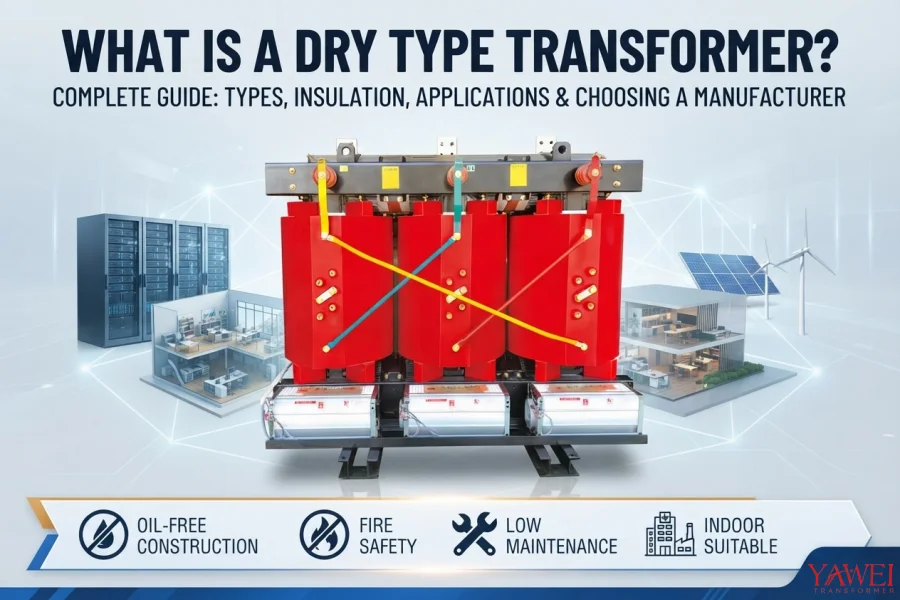
What Is a Dry Type Transformer? Types, Insulation, Applications & Manufacturer Guide
A transformateur à sec is a transformer that transfers electrical energy between circuits without using transformer oil or another liquid dielectric as its primary insulation medium. Instead, dry transformers use solid insulation materials and air for insulation and cooling.
Because they do not contain transformer oil, dry-type transformers are widely considered for indoor electrical installations, industrial facilities, commercial buildings, hospitals, data centers, renewable energy projects, and other applications where fire safety, environmental protection, and low maintenance are important.
But choosing the right dry transformer involves much more than selecting a kVA rating. The insulation system, voltage level, cooling method, installation environment, efficiency, impedance, applicable standards, and manufacturer capability all affect the final solution.
This guide explains what a dry type transformer is, how it works, the main technologies available, how dry type transformer insulation works, where these transformers are used, and what to consider when selecting a reliable dry type transformer manufacturer.
What Is a Dry Type Transformer?
A transformateur à sec is an electrical transformer designed without liquid insulation such as mineral oil.
Its basic function is the same as other transformers: it changes AC voltage from one level to another through electromagnetic induction while maintaining the required frequency.
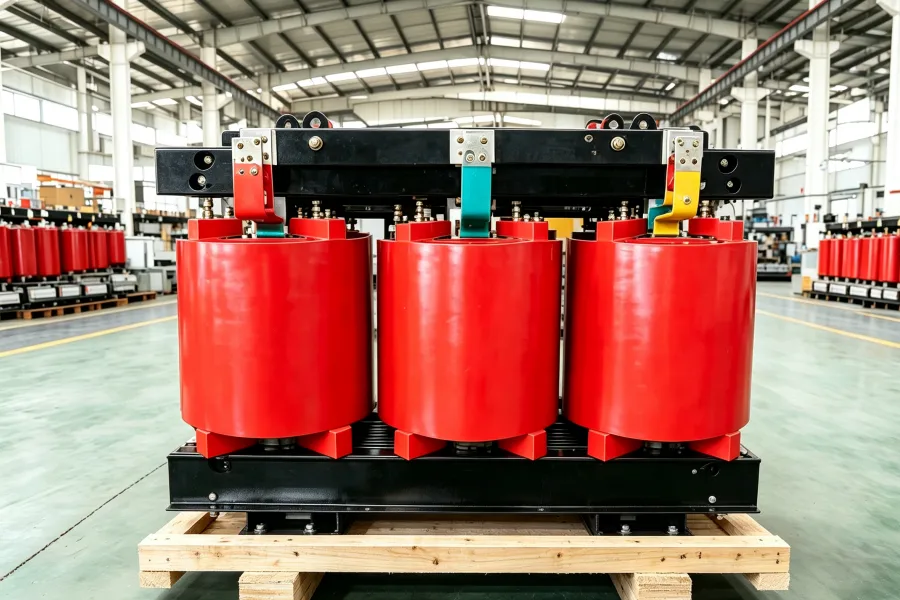
A typical dry transformer consists of:
- Magnetic core
- High-voltage winding
- Low-voltage winding
- Solid insulation system
- Système de refroidissement
- Clamping and supporting structures
- Electrical terminals
- Optional enclosure and monitoring equipment
For example, a transformer may be designed to reduce:
13.8 kV → 480Y/277 V
or:
11 kV → 400/230 V
depending on the electrical system.
The key difference between dry and oil immersed transformers is the way the windings are insulated and cooled. Oil immersed transformers use insulating liquid, while dry transformers rely on solid insulation and air.
This makes dry transformers particularly attractive where oil-free electrical equipment is preferred.
How Does a Dry Type Transformer Work?
The operating principle is based on electromagnetic induction.
When alternating current is supplied to the primary winding, it produces a changing magnetic flux inside the transformer core. This magnetic flux induces a voltage in the secondary winding.
The approximate voltage relationship is:
V₁ / V₂ = N₁ / N₂
where:
- V₁ is the primary voltage
- V₂ is the secondary voltage
- N₁ is the number of primary winding turns
- N₂ is the number of secondary winding turns
If the secondary winding has fewer turns than the primary winding, the transformer reduces voltage. If it has more turns, the transformer increases voltage.
The core and winding design determine important performance characteristics such as:
- Voltage ratio
- No-load loss
- Load loss
- Efficacité
- Temperature rise
- Impédance
- Short-circuit performance
- Noise level
The transformer must also be designed so that the insulation system can withstand the required electrical and thermal stresses throughout its service life.
Main Dry Type Transformer Technologies
There is no single construction that is suitable for every application. Modern dry transformers can use different winding insulation technologies depending on voltage, capacity, environment, and project requirements.
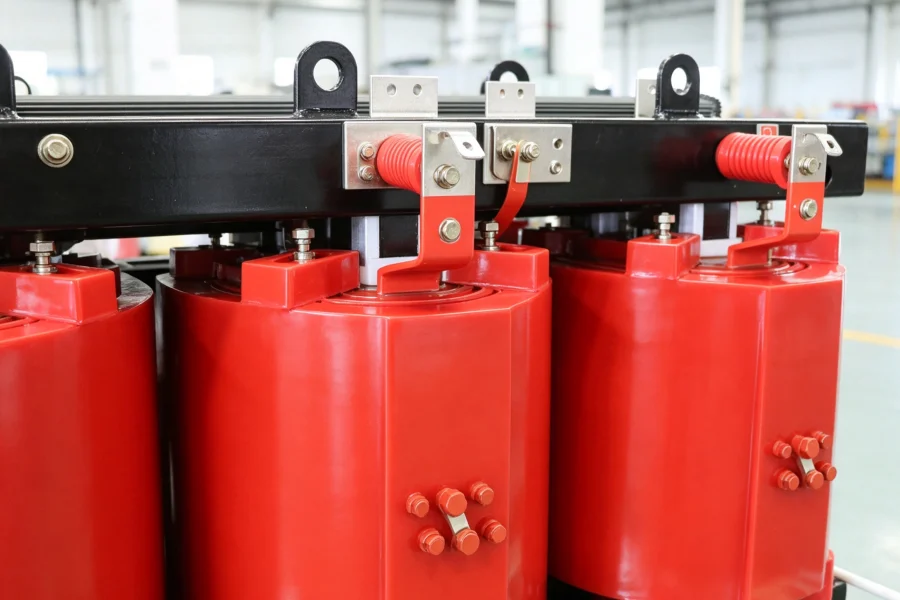
Cast Resin Dry Type Transformers
One of the most widely used designs is the cast resin dry type transformer.
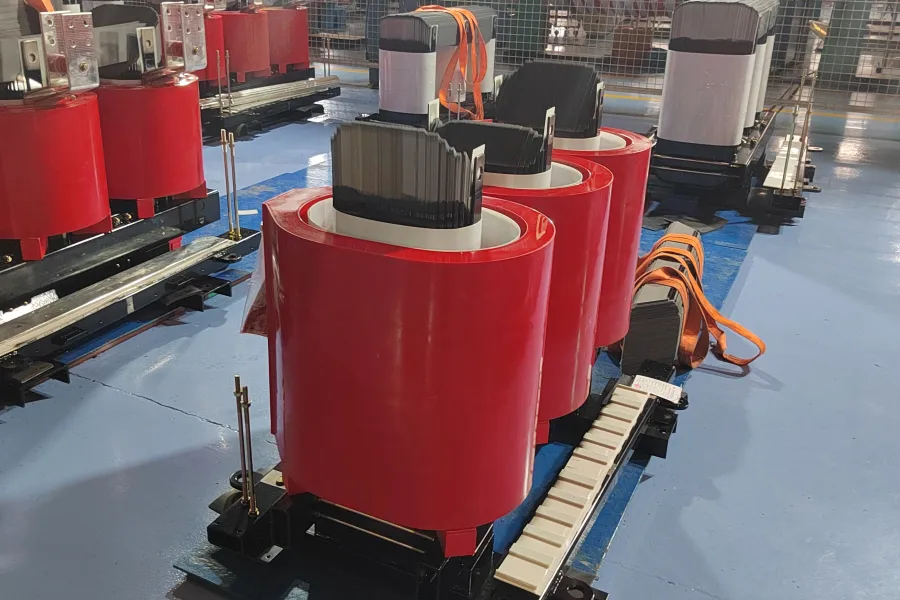
In this construction, the windings are encapsulated or cast with epoxy resin. The resin forms a solid insulation system around the windings and helps protect them against moisture, dust, pollution, and environmental contamination.
Cast resin transformers are commonly selected for:
- Installations industrielles
- Bâtiments commerciaux
- Hôpitaux
- Centres de données
- Airports
- Railway infrastructure
- Projets d'énergie renouvelable
- Indoor substations
- Solar and battery energy storage systems
The main benefits of cast resin technology include strong mechanical protection, good environmental resistance, and reduced exposure of the winding insulation to external contamination.
For applications with high humidity or significant dust and pollution, the insulation design should be carefully evaluated rather than selecting a transformer solely based on its rated capacity.
VPI Dry Type Transformers
Another important technology is VPI, or Vacuum Pressure Impregnated construction.
During manufacturing, the windings are treated with insulating varnish or resin under controlled vacuum and pressure conditions. This helps improve the mechanical stability and electrical insulation of the winding system.
VPI designs are used in many industrial and commercial applications.
The choice between VPI and cast resin depends on factors such as:
- Voltage
- Capacité
- Environnement d'installation
- Humidity
- Pollution
- Temperature
- Mechanical requirements
- Fire requirements
- Cost
- Customer specifications
A professional manufacturer should recommend the insulation technology based on the complete application rather than automatically using one design for every project.
Dry Type Transformer Insulation: What You Need to Know
Dry type transformer insulation is one of the most important parts of the transformer.
The insulation system separates conductive components and prevents electrical breakdown between:
- Enroulements haute et basse tension
- Windings and the core
- Individual turns
- Different phases
- Conductive components and grounded structures
The insulation must withstand both electrical and thermal stresses.
During operation, the transformer is exposed to:
- Continuous operating voltage
- Temperature rise
- Short-circuit forces
- Switching transients
- Lightning impulse stresses
- Humidity
- Dust
- Vibration
- Thermal cycling
For medium voltage applications, insulation design becomes even more critical because the electrical stresses are significantly higher.
The quality of the insulation materials is important, but the overall manufacturing process is equally important. Winding design, resin casting or impregnation, curing, mechanical clamping, clearances, and factory testing all influence transformer reliability.
Medium Voltage and Low Voltage Dry Transformers
Dry transformers can be designed for different voltage levels and applications.
For example, low voltage dry type transformers are often used in commercial buildings, industrial equipment, control systems, HVAC systems, lighting, automation, and other low-voltage electrical applications.
At higher voltage levels, medium voltage dry type transformers are widely used for industrial distribution, substations, commercial facilities, renewable energy projects, and infrastructure.
Depending on the project, medium-voltage primary voltages may include:
- 6.6 kV
- 10 kV
- 11 kV
- 13,2 kV
- 13,8 kV
- 15 kV
- 20 kV
- 22 kV
- 33 kV
- 34,5 kV
The exact voltage range should always be confirmed with the transformer manufacturer based on the applicable electrical standard and project specification.
A dry transformer can also be configured as a dry type distribution transformer, reducing medium voltage to a utilization voltage for buildings, factories, data centers, or other facilities.
For specialized electrical systems, a dry type isolation transformer can provide electrical separation between the primary and secondary circuits.
Dry Type Transformer vs Oil Immersed Transformer
Both dry and oil immersed transformers are proven technologies, but they are suitable for different applications.
The correct choice depends on the project.
For a large outdoor utility substation, an oil immersed transformer may offer advantages in terms of cooling and overall cost.
For an indoor commercial building, hospital, factory, or data center, a dry transformer may offer significant advantages because it does not require liquid insulation.
Advantages of Dry Type Transformers
The growing use of dry transformers is driven by several technical and operational advantages.
Oil-Free Construction
Dry transformers do not require transformer oil for their primary insulation system. This eliminates oil filling, oil leakage, and oil-related maintenance.
Lower Maintenance Requirements
Routine maintenance generally focuses on cleaning, ventilation, electrical connections, temperature monitoring, and mechanical inspection.
Suitable for Indoor Installations
Dry transformers can be installed in electrical rooms and buildings where liquid-filled equipment may require additional fire protection or containment measures.
Good Environmental Performance
The absence of transformer oil eliminates the risk of oil leakage from the transformer itself.
Strong Environmental Resistance
Cast resin construction can provide good resistance to moisture, dust, and pollution.
Flexible Applications
Dry transformers are available in a wide range of capacities and configurations for industrial, commercial, renewable energy, transportation, and infrastructure applications.
Where Are Dry Type Transformers Used?
Dry transformers are used across a wide range of electrical systems.
Installations industrielles
Factories may use dry transformers to supply motors, production lines, pumps, compressors, HVAC systems, automation equipment, and other industrial loads.
Industrial projects may require special consideration for high ambient temperatures, dust, harmonics, motor starting, and continuous operation.
Bâtiments commerciaux
Dry type distribution transformers can be used in:
- Immeubles de bureaux
- Hôtels
- Centres commerciaux
- Airports
- High-rise buildings
- Commercial complexes
Their oil-free construction can simplify installation in indoor electrical rooms.
Centres de données
Data centers require reliable and efficient electrical distribution.
Dry transformers may be used for:
- Utility distribution
- Systèmes UPS
- Mechanical systems
- Critical loads
- Auxiliary power
Efficiency, harmonic loading, temperature monitoring, redundancy, short-circuit performance, and noise should all be considered during design.
Hôpitaux
Hospitals require reliable electrical infrastructure and strict safety considerations.
Dry transformers can be used for main distribution, auxiliary systems, and specialized isolation applications.
Solar Power and Energy Storage
Dry transformers are increasingly used in renewable energy systems.
A typical system may be arranged as:
Inverter → Low Voltage AC → Transformer → Medium Voltage Grid
The transformer must be designed according to the inverter output, grid voltage, harmonic characteristics, ambient temperature, and project requirements.
How to Select the Right Dry Type Transformer
The correct transformer cannot be selected by kVA alone.
Before requesting a quotation, provide the manufacturer with as much technical information as possible.
1. Rated Power
Par exemple :
- 250 kVA
- 500 kVA
- 1000 kVA
- 1250 kVA
- 1600 kVA
- 2000 kVA
- 2500 kVA
2. Primary and Secondary Voltage
Par exemple :
13.8 kV / 480Y/277 V
3. Frequency
Usually:
50 Hz or 60 Hz
4. Number of Phases
Usually:
Three phase
5. Vector Group
Examples include:
Dyn11, Dyn1, Yyn0
6. Impedance
Impedance affects voltage regulation, fault current, and system coordination.
7. Cooling
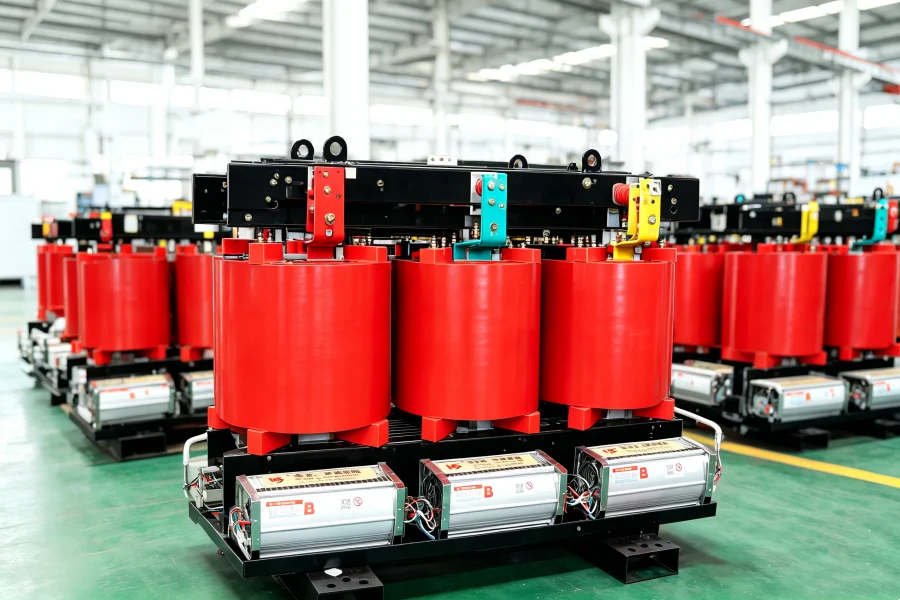
Typical dry transformer cooling arrangements include:
AN — Air Natural
et
AF — Air Forced
Some transformers can operate with AN cooling under normal conditions and use fans when additional capacity is required.
8. Installation Environment
Tell the manufacturer whether the transformer will be installed:
- A l'intérieur
- Outdoors
- In an electrical room
- In a container
- In a substation
Also provide the expected ambient temperature, altitude, humidity, pollution, and dust conditions.
9. Applicable Standards
Depending on the destination market, the project may require compliance with:
- CEI
- IEEE
- ANSI
- CSA
- UL
- Local electrical standards
IEC 60076-11 and Dry Type Transformers
For international transformer projects, standards compliance is an important part of supplier evaluation.
IEC 60076-11 is the IEC standard specifically covering dry-type transformers.
Depending on the project and destination country, additional standards may also apply.
Lors de la recherche de IEC 60076 certified dry-type transformer manufacturers, buyers should carefully check what the supplier actually means by “IEC certified.”
There is an important difference between a transformer being:
designed and tested according to IEC 60076-11
and having:
independent third-party certification for a specific requirement.
Before purchasing, ask the supplier for relevant documentation, including:
- Normes applicables
- Rapports d'essais de routine
- Rapports d'essais de type
- Temperature-rise test data
- Insulation test results
- Partial discharge test results where applicable
- Factory inspection documents
- Quality management certificates
This is particularly important for EPC projects, utilities, data centers, and large international installations.
What Tests Should a Dry Transformer Manufacturer Provide?
A reliable dry type transformer manufacturer should have an established factory testing process.
Typical routine tests may include:
- Résistance à l'enroulement
- Voltage ratio
- Phase displacement
- No-load loss
- No-load current
- Load loss
- Impédance
- Applied voltage test
- Induced voltage test
Depending on the transformer design and project specification, additional tests may include:
- Temperature-rise test
- Test d'impulsion de foudre
- Short-circuit test
- Essai de décharge partielle
- Noise test
The exact test program should be confirmed according to the applicable standard and customer requirements.
How to Choose a Reliable Dry Type Transformer Supplier
Searching for dry type transformer suppliers ou dry type transformer manufacturers will produce many options, but not all suppliers have the same engineering and manufacturing capabilities.
When comparing manufacturers, consider the following.
Manufacturing Capability
Check:
- Maximum voltage
- Maximum capacity
- Production capacity
- Installations de production
- Testing equipment
- Quality control system
Engineering Capability
A qualified manufacturer should be able to customize:
- Rated power
- Voltage
- Impédance
- Vector group
- Tap range
- Refroidissement
- Enceinte
- Dimensions
- Terminals
- Monitoring systems
International Standards
Confirm whether the manufacturer can manufacture and test the transformer according to the standards required for your destination market.
Project Experience
Previous experience with international EPC contractors, utilities, renewable energy projects, industrial facilities, and overseas delivery can be an important indicator of supplier capability.
Documentation
A professional supplier should be able to provide:
- Technical datasheets
- General arrangement drawings
- Wiring diagrams
- Test reports
- Installation manuals
- Maintenance instructions
- Packing specifications
- Nameplate information
Les best dry type transformer manufacturers are not necessarily those offering the lowest initial price. A better evaluation considers technical capability, quality, testing, delivery, documentation, customization, and long-term support.
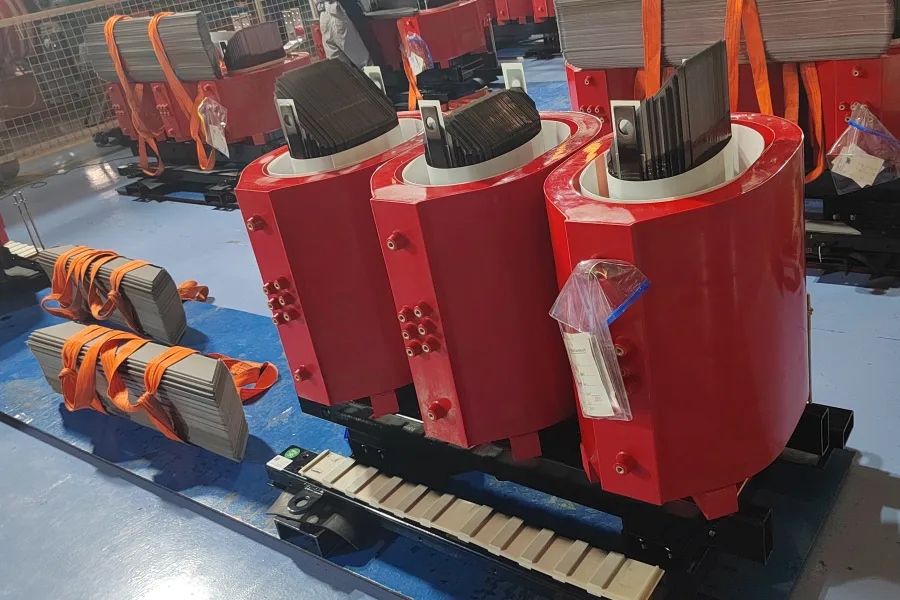
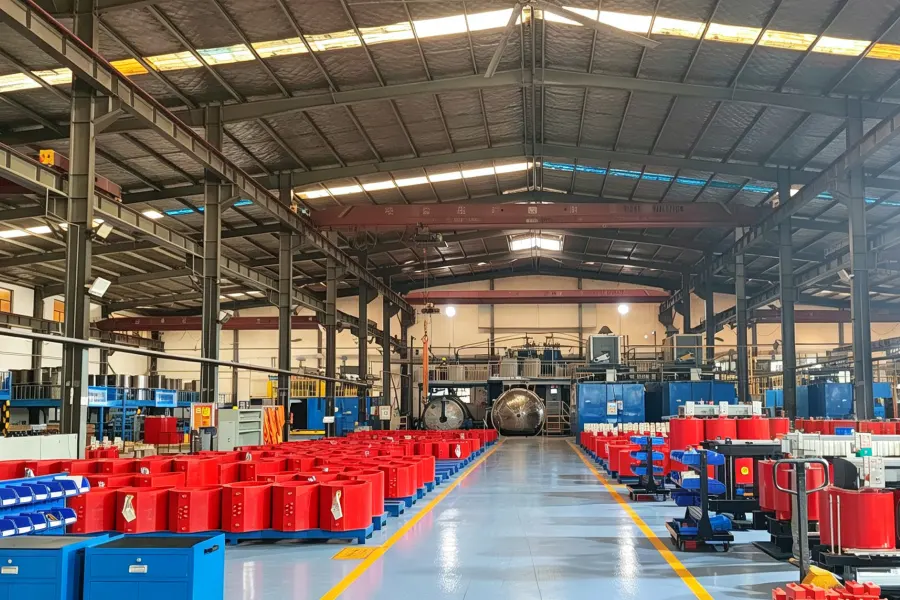
Pourquoi choisir le transformateur Yawei ?
Yawei Transformer provides customized transformer solutions for industrial, commercial, renewable energy, utility, and infrastructure projects.
Our transformer manufacturing capabilities cover a wide range of voltage levels and power ratings, allowing customers to source both standard and customized transformer solutions.
For dry transformer applications, Yawei can provide solutions including:
- Cast resin dry type transformers
- Medium voltage dry type transformers
- Low voltage dry transformers
- Dry type distribution transformers
- Dry type isolation transformers
- Industrial dry transformers
- Renewable energy transformers
- Solutions de transformation personnalisées
Customers can specify their requirements for:
- Power rating
- Primary voltage
- Secondary voltage
- 50 Hz / 60 Hz
- Phase
- Vector group
- Impédance
- Refroidissement
- Isolation
- Enceinte
- Temperature monitoring
- Environnement d'installation
- Normes applicables
Our engineering team can review the complete electrical requirements and develop a transformer configuration suitable for the project.
Request a Dry Type Transformer Quotation
If you are currently looking for a dry type transformer supplier for an industrial, commercial, renewable energy, data center, or infrastructure project, send us your technical requirements.
For an accurate quotation, please provide:
Rated Power: 1000 kVA
Tension primaire : 13,8 kV
Tension secondaire : 480Y/277 V
Fréquence : 60 Hz
Phase: 3 Phase
Vector Group: Dyn11
Isolation : Cast Resin
Refroidissement : AN/AF
Installation : Indoor
Quantity: Required quantity
Destination: Country / project location
Standard: IEC / IEEE / ANSI / other project specification
If some information is not available, simply send us the transformer nameplate, technical specification, single-line diagram, or tender document.
Our engineering team can review the available information and help determine the appropriate transformer design.
Get a Factory-Direct Dry Type Transformer Solution
Whether you need a cast resin dry type transformer, medium voltage dry transformer, low voltage dry transformer, dry type distribution transformer, or dry type isolation transformer, choosing the right manufacturer is critical to the reliability and long-term performance of your electrical system.
Contact Yawei Transformer today for a customized technical proposal and factory quotation.
Yawei Transformer — Customized Transformer Solutions for Global Power Projects.
Questions fréquemment posées
What is a dry type transformer?
A dry type transformer is an electrical transformer that uses solid insulation and air instead of liquid transformer oil as its primary insulation and cooling system.
What is a cast resin dry type transformer?
A cast resin dry transformer uses epoxy resin to encapsulate or insulate its windings, providing strong electrical insulation and protection against environmental contamination.
Are dry type transformers better than oil immersed transformers?
Neither technology is universally better. Dry transformers are particularly suitable for many indoor and fire-sensitive applications, while oil immersed transformers remain widely used for outdoor utility and high-capacity applications.
What is a medium voltage dry type transformer?
It is a dry transformer designed for medium-voltage electrical distribution and transformation, commonly used in industrial plants, substations, renewable energy projects, and commercial facilities.
What is a dry type distribution transformer?
It is a dry transformer designed to reduce distribution voltage to a lower voltage suitable for electrical loads in buildings, factories, infrastructure, and other facilities.
What is a dry type isolation transformer?
It is a transformer with electrically separated primary and secondary windings that provides galvanic isolation between circuits.
Do dry transformers require maintenance?
Yes. Although dry transformers generally require less maintenance than oil immersed transformers, regular inspection, cleaning, ventilation checks, electrical connection checks, and temperature monitoring are still important.
What standard is used for dry type transformers?
IEC 60076-11 is the principal IEC standard specifically covering dry-type transformers. Other standards may apply depending on the application, destination market, and project specification.