










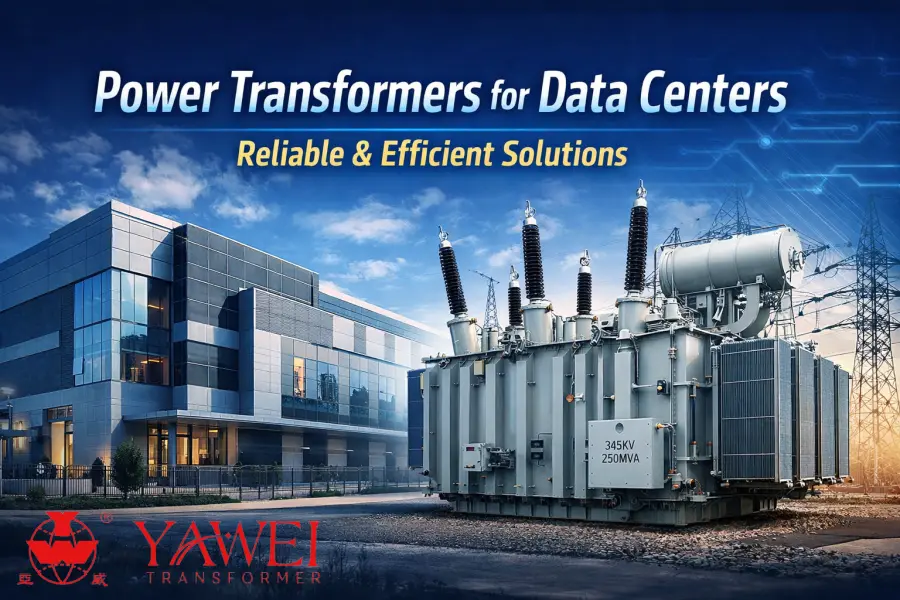
Introduction
The rapid growth of cloud computing, artificial intelligence, and hyperscale digital infrastructure is driving unprecedented demand for data centers across the United States and Europe. As power consumption continues to rise, ensuring a stable, efficient, and resilient electrical supply has become a critical priority.
At the core of every high-performance data center lies a key component: the power transformer.
As global infrastructure projects scale up, experienced manufacturers are increasingly delivering high-voltage transformer solutions designed specifically for North American and European grid requirements. These systems play a decisive role in maintaining uptime, energy efficiency, and long-term operational stability.
Selecting the right transformer is not only about voltage conversion—it directly impacts system reliability, lifecycle cost, and overall infrastructure resilience.
Why Data Centers Require Specialized Transformers
Unlike conventional industrial facilities, data centers operate under continuous load with extremely strict uptime requirements.
Even brief interruptions can result in:
- Financial losses at scale
- Service disruption or data downtime
- Equipment stress or damage
- SLA penalties and contractual risks
For this reason, modern data center transformers are engineered for mission-critical performance, ensuring:
- 24/7 continuous operation
- Stable voltage under dynamic load changes
- Seamless integration with redundancy systems (N+1, 2N architectures)
- Reduced electrical and thermal losses
These requirements push transformer design beyond standard utility applications.
Key Technical Considerations for Data Center Transformers
1. Reliability and Service Life
Data center infrastructure demands equipment designed for long-term continuous operation.
Key engineering requirements include:
- High-grade insulation systems
- Reinforced mechanical structure
- Proven short-circuit withstand capability
Advanced manufacturing processes and strict quality control ensure stable performance under heavy electrical stress and long duty cycles.
2. Energy Efficiency and Regulatory Compliance
Energy consumption is one of the largest operational costs for large-scale data centers.
Modern transformer systems must comply with:
- DOE efficiency standards (United States)
- EU EcoDesign requirements
Low-loss core design and optimized winding structures help reduce:
- No-load losses
- Load losses
- Overall lifecycle energy cost
These improvements also contribute to lower carbon emissions, aligning with global sustainability targets.
3. Flexible Design and System Scalability
Data center infrastructure is highly scalable and often expands in phases.
Common requirements include:
- Multiple voltage configurations (e.g., 345kV / 115kV / 13.8kV)
- Modular capacity expansion capability
- Adaptability to future load growth
Modern transformer engineering supports customized solutions based on grid conditions and project architecture.
4. Safety and Environmental Performance
Depending on installation requirements, transformers may need to meet additional constraints such as:
- Fire safety compliance
- Low acoustic noise levels
- Environmentally friendly insulating media (such as ester-based fluids)
Both oil-filled and dry-type transformer technologies are used depending on site conditions and risk classification.
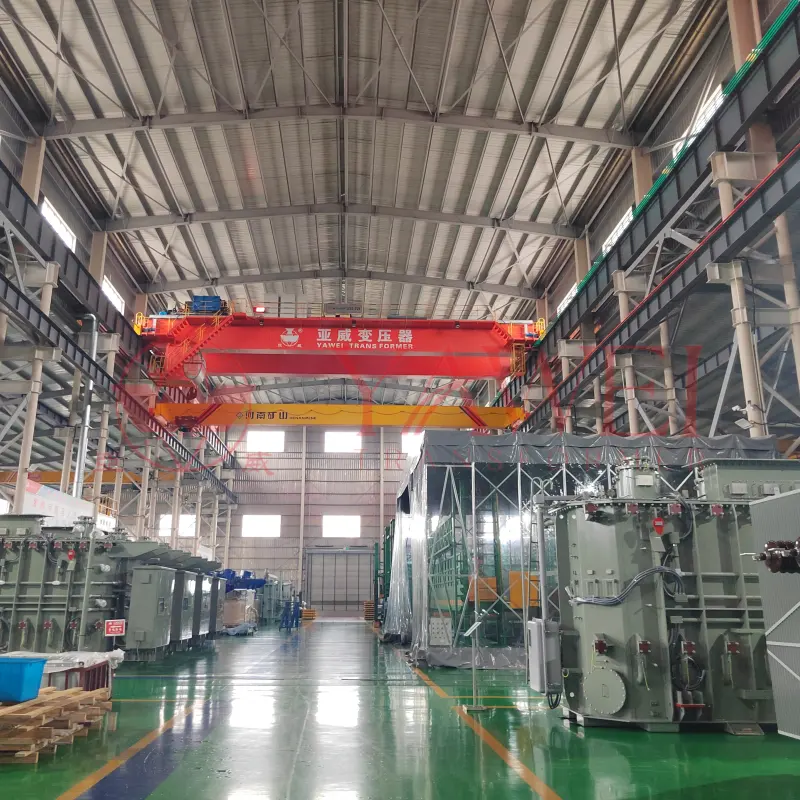
Oil-Filled vs. Dry-Type Transformers in Data Centers
Oil-Filled Transformers
Best suited for large-scale and high-voltage applications:
- High capacity (hundreds of MVA range)
- Efficient heat dissipation
- Cost-effective for utility-scale installations
These systems are commonly deployed in outdoor substations supporting hyperscale data centers.
Dry-Type Transformers
Typically used for indoor or urban environments:
- No oil, improved fire safety
- Lower environmental risk
- Easier maintenance in enclosed spaces
Selection depends on site layout, safety standards, and regulatory requirements.
Typical Transformer Architecture in Data Centers
To ensure maximum uptime, data center electrical systems often adopt layered power distribution:
- High-voltage substation transformers (e.g., 345kV step-down systems)
- Medium-voltage distribution transformers (34.5kV / 13.8kV)
- Redundant power configurations:
- N+1
- 2N
- 2N+1
These architectures ensure continuous operation even under fault conditions.
Case Study: 250MVA 345kV Transformer for a U.S. Data Center
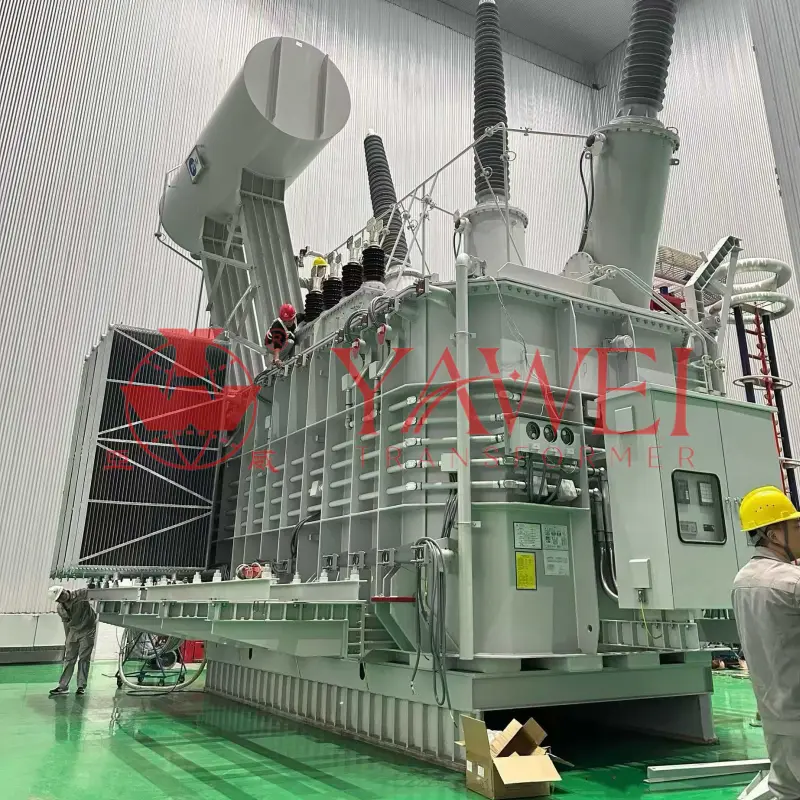
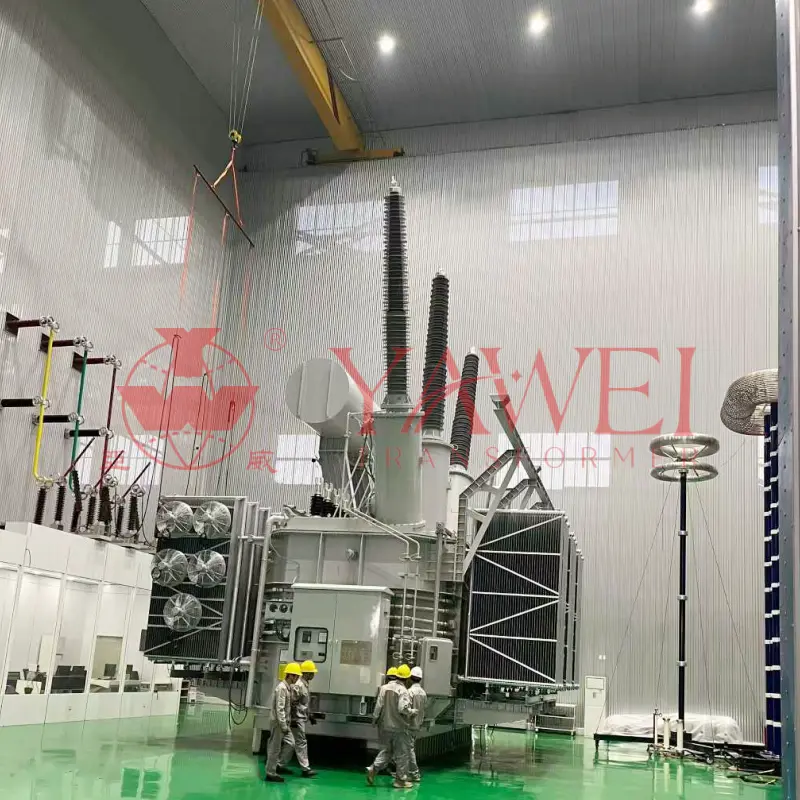
To support a hyperscale data center project in the United States, a 250MVA, 345kV fully insulated power transformer was engineered and manufactured for North American grid requirements.
Project Overview
- Application: Hyperscale Data Center
- Location: United States
- Capacity: 250MVA
- Voltage Level: 345kV
- Frequency: 60Hz
- Standards: IEEE compliant
Engineering Highlights
Fully Insulated Design
The transformer adopts an all-winding insulated structure, improving:
- Dielectric strength
- System safety under transient overvoltages
- Long-term operational reliability
High Efficiency Optimization
Design improvements focus on lifecycle energy performance:
- Optimized magnetic core geometry
- Reduced no-load and load losses
- Enhanced thermal stability
Short-Circuit Strength
Engineered to withstand:
- Grid disturbances
- Sudden load variations
- Fault current conditions
Advanced Cooling System
Equipped with ONAF/OFAF cooling options for stable performance under continuous high-load operation.
Factory Testing and Quality Assurance
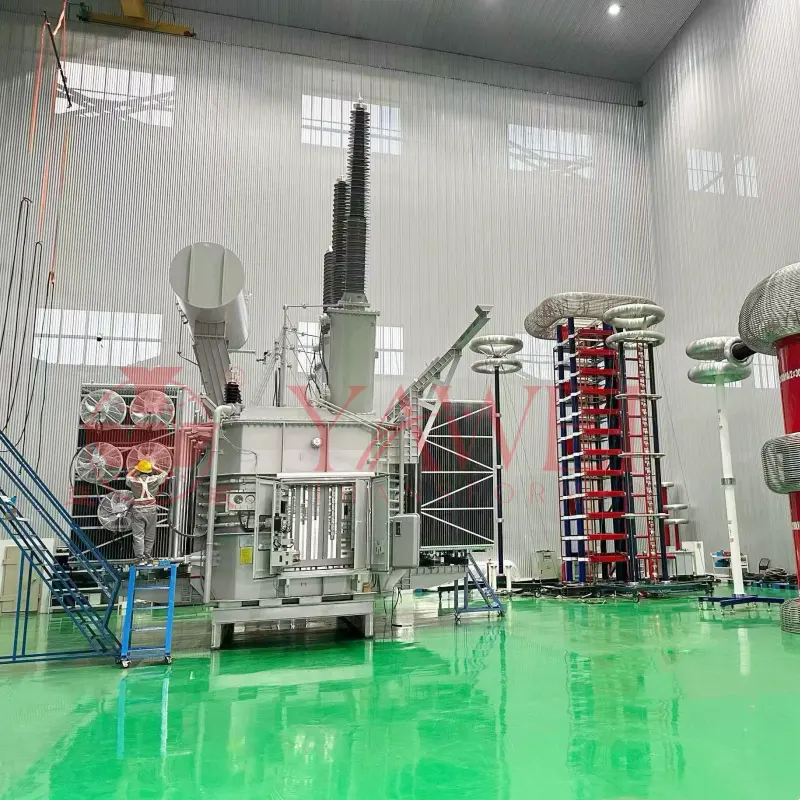
Before delivery, the unit underwent full factory acceptance testing, including:
- Routine electrical testing
- Temperature rise verification
- Lightning impulse testing
- Partial discharge measurement
These tests ensure compliance with IEEE requirements and long-term field reliability.
Delivery and Logistics
The transformer was prepared for export with:
- Reinforced industrial packaging
- Moisture and humidity protection systems
- Coordinated international logistics to the project site
Engineering Value for Data Center Projects
High-voltage transformer selection directly influences:
- System uptime stability
- Energy efficiency performance
- Infrastructure scalability
- Total lifecycle cost
Experienced manufacturers play a key role in ensuring grid compatibility and long-term operational reliability for mission-critical facilities.
Conclusion
As data center infrastructure continues to expand across North America and Europe, demand for high-efficiency, high-reliability power transformers will continue to grow.
The successful deployment of a 250MVA 345kV transformer for a U.S. data center demonstrates the importance of:
- Advanced engineering design
- Strict quality control systems
- Compliance with international standards (IEEE/IEC)
- Application-specific customization
Call to Action
For hyperscale data center projects requiring high-voltage transformer solutions, customized engineering support is available for North American and European markets.
Services include:
- High-capacity transformer design up to 1200MVA
- IEEE/IEC compliant engineering
- Fast quotation and global delivery support