










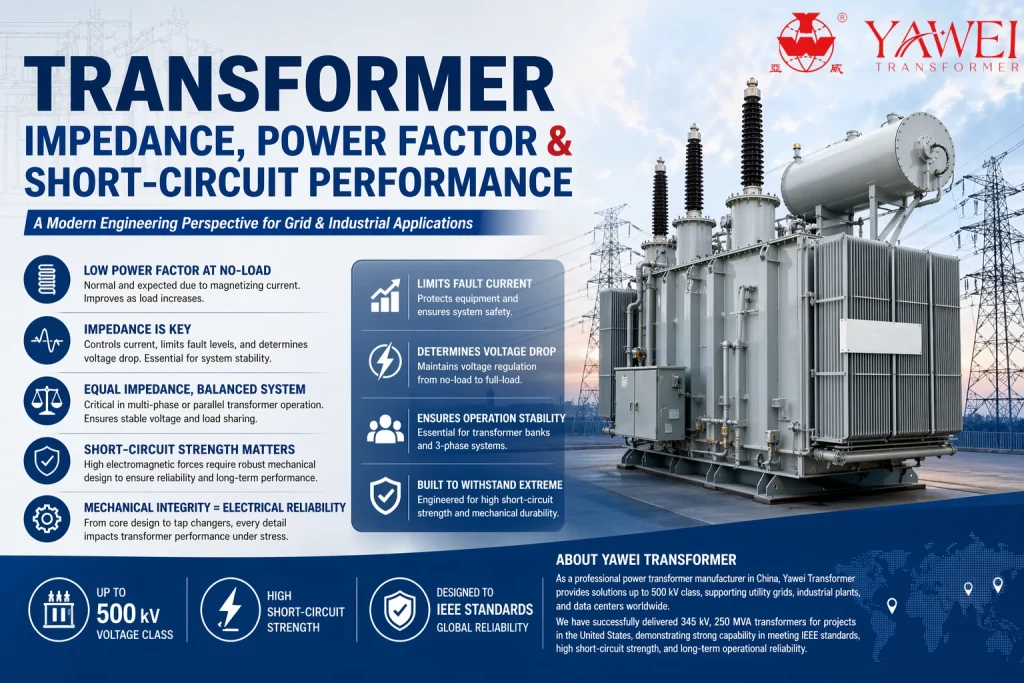
O perspectivă inginerească modernă pentru aplicații de rețea și industriale
Transformatoarele de putere nu sunt doar dispozitive de conversie a energiei - ele sunt sisteme electrice dinamice al căror comportament se modifică semnificativ în condiții de funcționare fără sarcină, sarcină și defecte. Înțelegerea impedanță, factor de putere și performanță la scurtcircuit este esențială pentru proiectarea unor rețele electrice stabile și eficiente.
1. Funcționarea în gol: De ce transformatoarele încă consumă energie
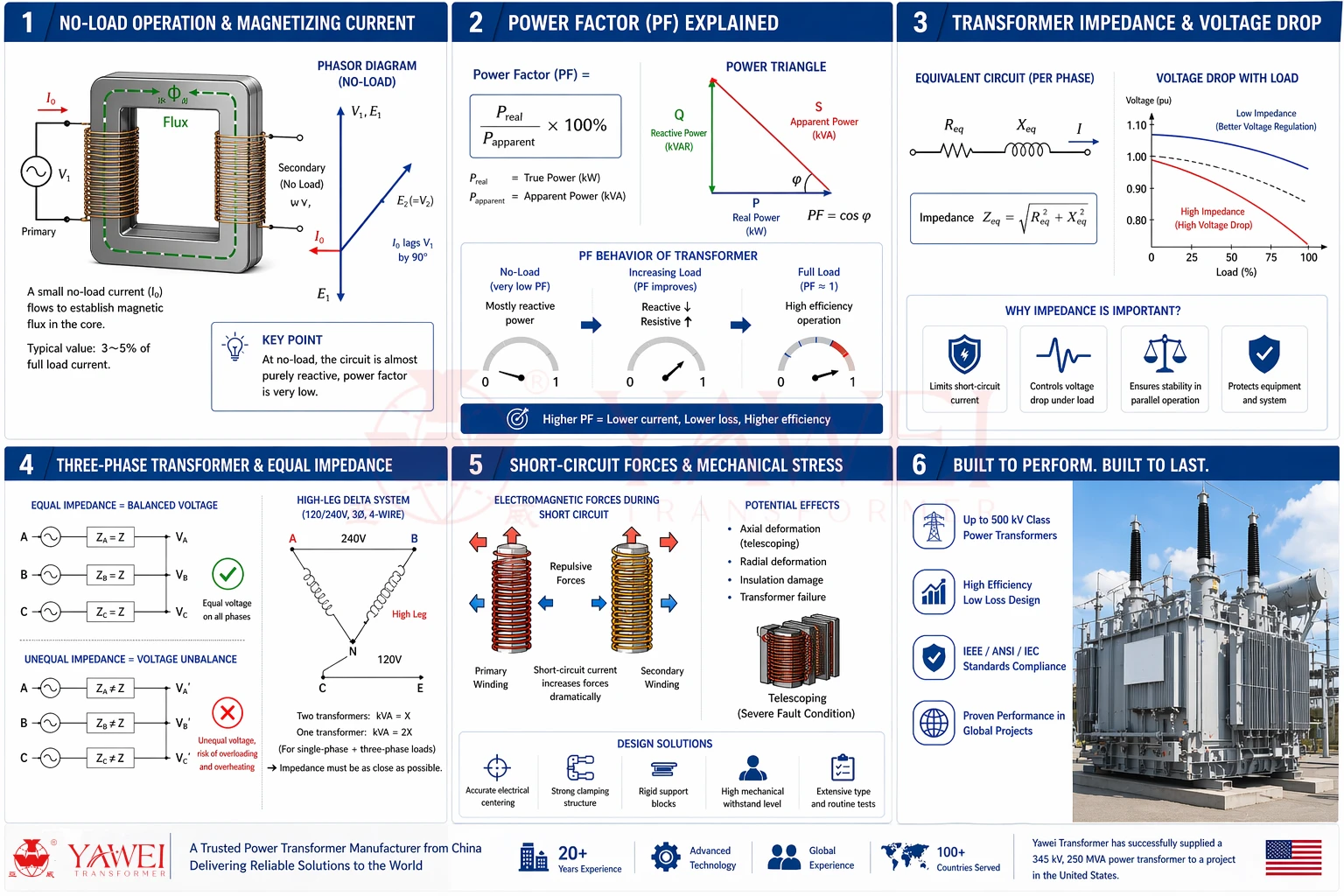
Chiar și atunci când un transformator nu are nicio sarcină conectată, acesta nu este niciodată complet inactiv. Un curent mic, cunoscut sub numele de curent fără sarcină sau curent de excitație, continuă să circule în înfășurarea primară.
De obicei, acest curent este de aproximativ 3-5% din curentul nominal, iar funcția sa principală este de a:
- Stabilirea fluxului magnetic în miezul transformatorului
- Susținerea inducției electromagnetice necesare pentru transformarea tensiunii
În condiții fără sarcină:
- Circuitul se comportă predominant inductiv
- Puterea reactivă domină
- Consumul real de energie este limitat la pierderi în miez (histerezis + pierderi prin curenți turbionari)
Ca urmare, transformatoarele în gol prezintă în mod natural o factor de putere scăzut, ceea ce reprezintă mai degrabă un comportament așteptat decât ineficiență.
2. Factorul de putere: De la energia reactivă la producția utilă
Factorul de putere (PF) descrie eficiența cu care energia electrică este transformată în muncă utilă.
În termeni simpli:
- PF scăzut → putere reactivă mare → utilizare ineficientă a energiei
- PF ridicat → mai multă putere reală → funcționare eficientă a sistemului
Comportamentul transformatorului în funcție de condițiile de sarcină
- Stare fără sarcină:
Factorul de putere este foarte scăzut din cauza curentului magnetizant dominant - Încărcare parțială:
Componenta rezistivă (putere reală) crește - Încărcare completă:
Factorul de putere se apropie de unitate pe măsură ce sistemul devine mai echilibrat
Această tranziție este o caracteristică normală și așteptată a funcționării transformatorului.
3. Impedanța transformatorului: Un parametru critic de proiectare
Impedanța transformatorului este unul dintre cei mai importanți parametri tehnici în proiectarea sistemelor energetice.
Se compune din:
- Rezistență (R): responsabil pentru pierderile de cupru
- Reactanța (X): responsabil pentru defazare și limitarea curentului
De ce contează impedanța
1. Limitarea curentului de defect
Fără impedanță suficientă, curenții de scurtcircuit ar atinge niveluri extrem de ridicate, riscând defectarea catastrofală a echipamentelor.
2. Reglarea tensiunii
Impedanța afectează în mod direct căderea de tensiune între condițiile fără sarcină și cu sarcină maximă.
3. Stabilitatea sistemului în funcționare paralelă
În sistemele cu mai multe transformatoare, echilibrul impedanței asigură:
- Chiar și partajarea sarcinii
- Distribuție stabilă a tensiunii
- Prevenirea supraîncălzirii sau a curenților circulanți
Considerații tehnice speciale
În unele sisteme de distribuție (cum ar fi configurațiile mixte de kVA), transformatoarele pot avea puteri nominale diferite. Cu toate acestea:
👉 Valorile impedanței trebuie să fie în continuare perfect adaptate
pentru a menține un comportament de fază stabil și un echilibru al sarcinii.
4. Performanța la scurtcircuit: Stres mecanic dincolo de electricitate
Condițiile de scurtcircuit sunt printre cele mai extreme scenarii de funcționare pentru un transformator.
Ce se întâmplă în timpul unei defecțiuni?
- Fluxuri de curent extrem de mari prin înfășurări
- Sunt generate forțe electromagnetice intense
- Înfășurări experiență puternică solicitări mecanice radiale și axiale
Aceste forțe pot conduce la:
- Deformarea înfășurării
- Deplasare axială
- Deteriorarea izolației
- Defecțiune mecanică permanentă
5. Proiectare tehnică pentru rezistența la scurtcircuit
Pentru a rezista condițiilor de defecțiune, transformatoarele sunt proiectate cu:
- Rezistență mecanică ridicată la prindere
- Structuri de înfășurare ranforsate
- Centre electrice aliniate cu precizie
- Sisteme robuste de distanțare a izolației
Pentru transformatoare de putere mari, capacitatea de rezistență la scurtcircuit este o cerință obligatorie de proiectare și testare, nu o caracteristică opțională.
6. Schimbătoare de robinet și considerații privind solicitările mecanice
Atunci când transformatoarele sunt echipate cu schimbătoare de bandă la sarcină (OLTC), în special pe partea HV, centrul electric al înfășurării se poate deplasa în timpul funcționării.
Acest lucru poate introduce:
- Ușoară asimetrie în distribuția fluxului
- Solicitare mecanică crescută în condiții de defect
- Complexitate de proiectare suplimentară pentru suportul de înfășurare
Prin urmare, integrarea schimbătorului de robinet trebuie să ia întotdeauna în considerare scurtcircuit coordonare mecanică.
7. Principalele lecții de inginerie
- Curentul fără sarcină este normal și necesar pentru funcționarea transformatorului
- Factorul de putere se îmbunătățește în mod natural pe măsură ce sarcina crește
- Impedanța este esențială pentru protecția împotriva defecțiunilor, controlul tensiunii și stabilitatea sistemului
- Impedanța echilibrată este esențială în sistemele paralele și multifazate
- Performanța la scurtcircuit este în mod fundamental o provocare de proiectare mecanică, nu doar una electrică
În ingineria transformatoarelor, performanța electrică și rezistența mecanică sunt inseparabile.
Despre Yawei Transformer
Ca producător profesionist de transformatoare de putere, Transformator Yawei proiectează și produce soluții până la Clasa 500 kV pentru aplicații globale de utilități, industriale și de infrastructură.
Am livrat unități de înaltă performanță, inclusiv Transformatoare de putere de 345 kV, 250 MVA pentru proiectele din America de Nord, îndeplinind standardele stricte IEEE cu o capacitate puternică de rezistență la scurtcircuit, eficiență ridicată și fiabilitate operațională pe termen lung.