








Transformatoare step-up vs. transformatoare step-down: Ghidul definitoriu pentru infrastructura energetică globală
În rețelele electrice moderne de utilități, transformarea eficientă a tensiunii este coloana vertebrală a furnizării fiabile de energie. Pe măsură ce infrastructura globală trece rapid la o combinație de centre de cerere industrială de mare capacitate și de integrare a energiei regenerabile extrem de descentralizată, înțelegerea mecanicii operaționale, a configurațiilor structurale și a structurii de integrare a sistemului atât transformatoare crescătoare și transformatoare coborâtoare este crucială pentru contractanții EPC, inginerii de utilități și integratorii de sisteme deopotrivă.
În calitate de principal producător global de infrastructură de distribuție a energiei electrice, Transformator Yawei proiectează sisteme trifazate răcite cu lichid care respectă cu strictețe standardele internaționale, inclusiv IEEE/ANSI, IEC și CSA. Acest ghid oferă o explorare tehnică cuprinzătoare a modului în care funcționează sistemele step-up și step-down, unde sunt implementate și cum funcționează în armonie în cadrele inginerești complete de echilibrare a instalației (BOP).
1. Principiile fundamentale ale transformării tensiunii
La baza lor, ambele tipuri de transformatoare se bazează pe Legea inducției electromagnetice a lui Faraday. Curentul alternativ care circulă prin înfășurarea primară generează un flux magnetic continuu variabil în miezul magnetic laminat, care ulterior induce o tensiune proporțională în înfășurarea secundară. Sensul de funcționare al acestei transformări depinde în întregime de raportul de torsiune (Np / Ns) între bobinele primară și secundară.
Formula pierderilor de transmisie: Transmisia energiei electrice pe distanțe lungi implică pierderi substanțiale de energie rezistivă, caracterizate prin formula: Ppierdere = I2R.
Pentru a minimiza disiparea de energie (Ppierdere) pe liniile de transport transfrontaliere, companiile de utilități publice cresc nivelul tensiunii de transport. Deoarece puterea electrică este definită ca P = V × I, creșterea tensiunii permite o scădere corespunzătoare a curentului (I), îmbunătățind în mod dinamic eficiența totală a sistemului.
2. Transformatoare step-up: Permiterea injecției de energie la scara utilităților
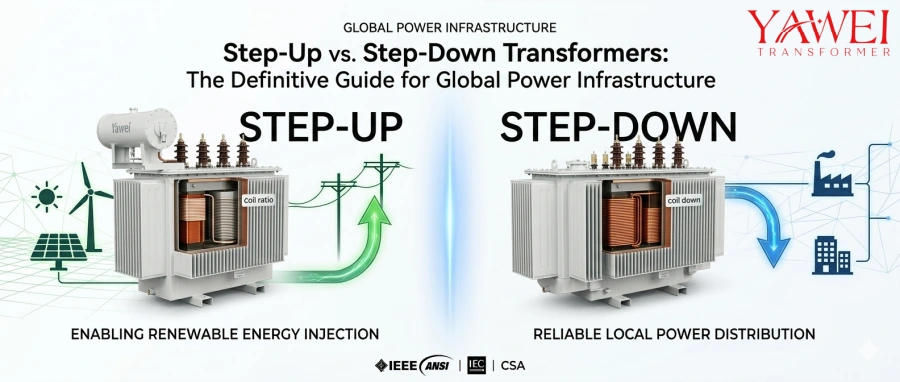
Un transformator crescător are o înfășurare primară cu mai puține spire decât înfășurarea sa secundară (Ns > Np). În consecință, acceptă o tensiune de intrare mai mică și furnizează o tensiune de ieșire mai mare, maximizând capacitatea de injectare a puterii pe distanțe lungi.
Aplicații critice în infrastructura solară și regenerabilă
În instalațiile solare fotovoltaice (PV) la scară largă și în parcurile eoliene, invertoarele centrale și de șir produc de obicei tensiuni alternative joase, adesea la parametri specializați precum 0,8kV. Pentru a injecta eficient această energie curată în infrastructura rețelei regionale de tensiune medie (de obicei 11kV, 22kV sau 33kV), este esențial un transformator de creștere robust. Transformatoarele Yawei specializate în domeniul regenerabilelor sunt proiectate cu înfășurări din cupru sau aluminiu de înaltă puritate și izolație avansată pentru a gestiona confortabil profilurile de sarcină variabile și distorsiunile armonice severe tipice ieșirilor invertoarelor solare.
Puncte forte ale designului pentru medii dificile
Deoarece site-urile de generare sunt frecvent situate în locații îndepărtate, solicitante din punct de vedere ecologic - cum ar fi zonele eoliene de coastă cu salinitate ridicată sau instalațiile solare de înaltă temperatură din deșert - unitățile step-up Yawei încorporează rezervoare ondulate complet sigilate (răcire ONAN), aripioare radiatoare externe robuste și lichide dielectrice premium pentru a menține o rezistență ridicată la izolare și disiparea fiabilă a căldurii pe o durată de viață operațională prelungită.
3. Transformatoare coborâtoare: Distribuția locală sigură și fiabilă a energiei electrice
În schimb, un transformator reducător are o înfășurare primară cu mult mai multe spire decât înfășurarea secundară (Np > Ns). Acesta interceptează energia de transport de înaltă tensiune sau de distribuție de medie tensiune și o convertește într-o tensiune mai joasă, viabilă din punct de vedere comercial, adaptată la utilitățile regionale și la operațiunile instalațiilor grele.
Sursă de alimentare industrială pentru sarcini grele
Uzinele de producție industrială, atelierele de asamblare a automobilelor, oțelăriile și exploatările miniere utilizează utilaje de mare capacitate care necesită o alimentare continuă, fără compromisuri. Transformatoarele trifazate de distribuție a energiei electrice în imersie în ulei Yawei (care reduc în mod obișnuit de la rețele de 10kV-35kV la tensiuni locale standard precum 0,4kV) sunt configurate cu schimbătoare flexibile de priză. Acest lucru permite operatorilor să ajusteze perfect raportul de tensiune, compensând căderile locale ale liniilor și menținând stabilitatea structurală a rețelei în condiții de fluctuații extreme ale sarcinii.
Distribuția comercială și a infrastructurii critice
Dincolo de aplicațiile industriale, sistemele trifazate step-down furnizează infrastructura de alimentare pentru campusurile spitalicești, centrele de date masive, rețelele de transport și centrele de clădiri comerciale. Aceste medii de utilități necesită o rezistență ridicată la scurtcircuit și o funcționare ultrasilențioasă. Linia noastră de transformatoare răcite cu lichid utilizează miezuri magnetice din oțel siliciu cu granulație orientată pentru a reduce pierderile de miez fără sarcină, garantând eficiența maximă a costurilor pentru operațiuni continue.
4. Matrice de comparare tehnică: Step-Up vs. Step-Down
Pentru a ajuta inginerii de proiect în timpul selecției structurii, tabelul de mai jos delimitează diferențele structurale și operaționale dintre configurațiile step-up și step-down în amenajările multifazate ale utilităților.
| Parametru tehnic | Transformator step-up | Transformator coborâtor |
|---|---|---|
| Raportul de înfășurare | Rotirile secundare depășesc cele primare (Ns > Np) | Învârtirile primarului depășesc cele ale secundarului (Np > Ns) |
| Transformarea tensiunii | Tensiune de intrare scăzută → Tensiune de ieșire ridicată | Tensiune de intrare ridicată → Tensiune de ieșire scăzută |
| Transformarea actuală | Curent de intrare ridicat → Curent de ieșire redus | Curent de intrare redus → Curent de ieșire ridicat |
| Implementare primară | Producerea energiei electrice, Centrale solare/ESS, Substații | Instalații industriale, centre comerciale, rețele de utilități |
| Tensiuni nominale tipice | 0,8kV → 11kV / 33kV (treaptă regenerabilă) | 10kV-35kV → 0,4kV / 230V (distribuție) |
| Capacități comune | 500kVA până la 2500kVA+ | 400kVA până la 2000kVA+ (de exemplu, unități de 1250KVA) |
5. Sinergia echilibrului instalației în proiectele EPC de 50 MW de peste mări
În cadrele EPC internaționale la scară largă - cum ar fi o centrală de utilități mici de 50 MW de peste mări, cu energie solară plus stocare - transformatoarele step-up și step-down nu funcționează izolat; acestea funcționează ca un ecosistem foarte bine coordonat. Panourile solare și sistemele de stocare a bateriilor se bazează pe unitățile step-up pentru a împinge electricitatea curată generată până la tensiunile de rețea pentru transmisia pe liniile naționale.
În același timp, sistemele auxiliare din cadrul aceleiași configurații de echilibrare a instalației (BOP) - cum ar fi camerele de control, sistemele locale de răcire ale substațiilor și grămezile integrate de încărcare a vehiculelor electrice - se bazează pe transformatoare compacte coborâtoare pentru a furniza energie electrică sigură de joasă tensiune pentru funcționarea hardware-ului local. Parteneriatul cu un furnizor integrat precum Yawei Transformer asigură alinierea perfectă a componentelor fizice, conformitatea uniformă cu metodologiile de testare IEEE/IEC și performanța electrică optimizată în întreaga infrastructură.
Optimizați astăzi proiectul dvs. de infrastructură energetică globală
Fie că proiectați un câmp solar de înaltă eficiență care necesită soluții robuste de creștere a tensiunii, fie că înființați un centru de producție industrială care necesită o transformare precisă a tensiunii de la medie la joasă tensiune, echipa de ingineri Yawei vă oferă echipamente certificate, construite la comandă în conformitate cu specificațiile tehnice ale proiectului dumneavoastră.
Sunteți gata să vă consultați cu un specialist în infrastructură? Contactați Yawei Transformer astăzi pentru consultanță tehnică, verificări detaliate ale schemelor echipamentelor și oferte competitive de proiecte.