









Substation Transformer: A Complete Guide to Principles, Types, Selection, and Procurement

Substation transformer for global power projects, customized factory-direct power transformer with 5–500 MVA capacity and 35–500 kV voltage range for Europe, North America, South America, USA, Canada, Australia, UK, Germany, and France

Introduction: Why Substation Transformers Are the Backbone of Power Systems

In every modern power system—whether it serves cities, industrial zones, mines, data centers, or renewable energy plants—substations play a critical role. And at the heart of every substation lies one piece of equipment that determines efficiency, safety, and long-term reliability:

the substation transformer.

From power generation to transmission and final distribution, electricity must be converted between different voltage levels. This voltage transformation is not optional—it is essential. A failure or poor selection of a substation transformer can result in large-scale outages, equipment damage, or millions of dollars in economic losses.

That is why substation transformers are often:

  • The most expensive asset in a substation

  • The most technically demanding equipment

  • The longest-life component, designed for 20–30 years of continuous operation

This article is written as a practical, engineering-oriented guide. Whether you are a project engineer, EPC contractor, utility buyer, or industrial investor, this guide will help you understand substation transformers from fundamentals to real-world selection and procurement.


What Is a Substation Transformer?

A substation transformer is a power transformer installed in electrical substations to convert voltage levels within transmission and distribution networks.

Its main functions include:

  • Stepping up voltage for long-distance power transmission

  • Stepping down voltage for regional or industrial distribution

  • Isolating different sections of the power system

  • Supporting system stability and fault management

Substation transformers are widely used in:

  • Power generation plants

  • Transmission substations

  • Industrial substations

  • Renewable energy grid-connection stations

  • Utility and national grid infrastructure


Substation Transformer vs Distribution Transformer: Key Differences

Although both are power transformers, substation transformers and distribution transformers are fundamentally different in design philosophy and application.

Aspect Substation Transformer Distribution Transformer
Typical Capacity ≥ 1 MVA (often 10–500 MVA) ≤ 2500 kVA
Voltage Level Medium, High, Extra-High Voltage Medium to Low Voltage
应用 System-level voltage conversion End-user power supply
Design Focus Reliability, system stability Efficiency, cost
Standards IEC, IEEE, ANSI, GB IEC, ANSI (simplified)
Investment Impact Core substation asset Auxiliary system component

In short:

Substation transformers are designed for system reliability, not just energy efficiency.

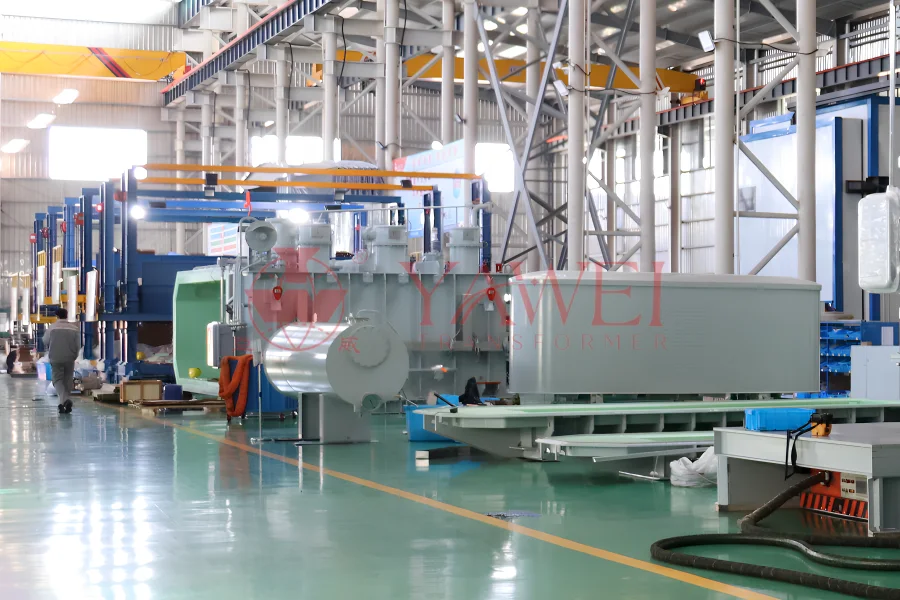
Substation power transformer with 5–500 MVA capacity and 35–500 kV voltage range, customized factory-direct transformer for utility, industrial, and renewable energy projects in Europe, North America, South America, USA, Canada, Australia, UK, Germany, France, and global markets
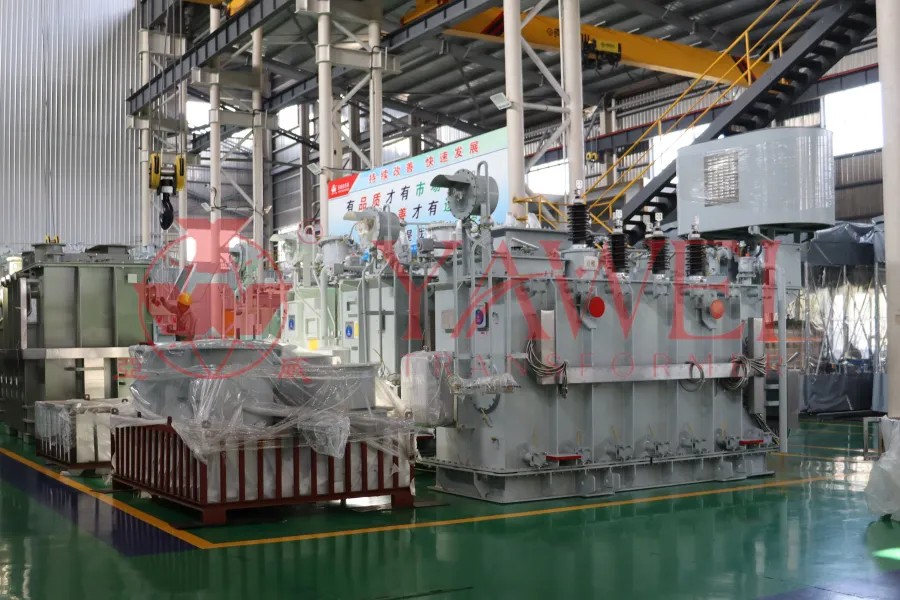
High voltage substation transformer with 5–500 MVA capacity and 35 kV–500 kV voltage class, customized factory-direct power transformer for utility and industrial projects in Europe, North America, South America, USA, Canada, Australia, UK, Germany, France, and global markets

Working Principle of Substation Transformers

At its core, a substation transformer operates based on electromagnetic induction. However, large power transformers are far more complex than textbook examples.

Simplified Operating Process:

  1. AC voltage is applied to the high-voltage winding

  2. Alternating magnetic flux is generated in the transformer core

  3. The magnetic flux induces voltage in the secondary winding

  4. Voltage level changes according to the winding turns ratio

Why Substation Transformers Are More Challenging:

  • Extremely high voltage stress (up to hundreds of kilovolts)

  • Very large currents

  • Continuous long-term operation

  • Exposure to short-circuit forces, lightning impulses, and grid disturbances

This requires advanced engineering in:

  • Core design

  • Winding structure

  • Insulation systems

  • Cooling technology

Buy Now:5000 kVA Three-Phase Oil-Immersed Substation Transformer 11 kV–35 kV for Industrial, Utility, and Infrastructure Projects – Factory Direct, Wholesale & Global Supply


Main Types of Substation Transformers

1. Classification by Cooling Method

Oil-Immersed Substation Transformers (Most Common)

  • Cooling medium: mineral oil or ester oil

  • Advantages: excellent heat dissipation, long service life

  • Typical cooling modes: ONAN, ONAF, OFAF

  • Applications: transmission and distribution substations worldwide

Dry-Type Substation Transformers

  • Cooling medium: air or epoxy resin

  • Advantages: fire-resistant, low maintenance

  • Limitations: capacity and voltage constraints

  • Applications: indoor substations, urban or fire-sensitive areas

For large-capacity substations, oil-immersed transformers remain irreplaceable.


2. Classification by Application

  • Step-up transformers (power plants, renewable energy)

  • Step-down transformers (transmission to distribution)

  • Interconnecting transformers (grid coupling)

  • Station service transformers (auxiliary power supply)


3. Classification by Winding Structure

  • Two-winding transformers

  • Three-winding transformers

  • Autotransformers (commonly used in EHV systems)


Key Technical Parameters of Substation Transformers

Understanding these parameters is essential for correct selection and safe operation.

1. Rated Power (MVA)

Typical ratings include:
5, 10, 20, 31.5, 40, 50, 63, 100, 150, 250 MVA

Selection principle:

  • Rated capacity ≥ maximum load × 1.2–1.3

  • Allow margin for future expansion

Incorrect capacity selection may lead to:

  • Chronic overloading

  • Reduced service life

  • Increased maintenance costs


2. Rated Voltage and Voltage Ratio

Examples:

  • 110 / 35 kV

  • 220 / 110 / 35 kV

  • 35 / 10 kV

Must clearly define:

  • System voltage

  • Tapping range

  • Connection group (Y, Δ)

  • Neutral grounding method


3. Impedance Voltage (%)

  • Limits short-circuit current

  • Impacts system protection coordination

  • Must be matched with grid design requirements

This parameter should always be confirmed with the utility or system designer.


4. Cooling Method Code

Common cooling modes:

  • ONAN: Oil Natural Air Natural

  • ONAF: Oil Natural Air Forced

  • OFAF / OFWF: Large-capacity transformers

Cooling design directly affects:

  • Load capability

  • Thermal aging

  • Transformer lifespan


Why Substation Transformer Prices Differ So Much

Many buyers ask:

“Why do two transformers with similar parameters have a 20–50% price difference?”

The answer lies in manufacturing quality and engineering details.

Key Cost Drivers:

1. Core Material and Design

  • High-grade grain-oriented silicon steel

  • Low-loss core structure

  • Precision stacking and clamping

2. Winding Technology

  • Continuously Transposed Conductors (CTC)

  • High short-circuit mechanical strength

  • Optimized electromagnetic balance

3. Insulation System

  • High-quality insulation paper

  • Controlled oil-paper aging performance

  • High dielectric margins

4. Drying and Oil Filling Process

  • Vacuum drying technology

  • Moisture content control

  • Direct impact on service life

A substation transformer is not a “commodity product”—it is an engineered system.

Read More:3500 kVA Industrial and Utility Oil-Filled Three-Phase Transformer 6 kV–35 kV – Substation, Grid & Infrastructure Projects, Global OEM


Common Failures and Preventive Measures

Typical Failures:

  • Insulation degradation

  • Winding deformation

  • Oil gas generation

  • Partial discharge

Preventive Measures:

  • Correct design and selection

  • Reasonable loading

  • Regular oil analysis (DGA)

  • Online monitoring systems

Early prevention significantly reduces life-cycle costs.


How to Select the Right Substation Transformer for Your Project

Step 1: Define Project Application

  • Utility grid

  • Industrial facility

  • Renewable energy plant

Step 2: Confirm Key Parameters

  • Rated power (MVA)

  • Voltage levels

  • Cooling method

Step 3: Identify Applicable Standards

  • IEC

  • IEEE / ANSI

  • National grid requirements

Step 4: Choose an Experienced Manufacturer

  • Proven substation transformer references

  • Engineering support capability

  • Reliable quality control

Lack of experience in large substation projects is a major risk.


Why Global Clients Choose Yawei Transformer

As a professional power transformer manufacturer, Yawei Transformer focuses on substation-level transformer solutions for global markets.

Our strengths include:

  • Substation transformers from 5 MVA to 500 MVA

  • Voltage levels up to extra-high voltage classes

  • Compliance with IEC, IEEE, ANSI standards

  • Custom engineering for grid, industrial, and renewable projects

  • Strict routine and type testing before delivery

We do not simply manufacture transformers—we deliver long-term power reliability solutions.

Read More:What Is a Power Transformer Detailed Working Principle, Key Components, Types, and Essential Terminology Explained


Final Thoughts: A Substation Transformer Is a 30-Year Investment

In power systems, substation transformers are not consumables—they are strategic assets.

A well-designed and correctly selected transformer means:

  • Decades of stable operation

  • Lower maintenance and operating costs

  • Reduced outage and failure risks

If you are planning or sourcing a substation transformer, our engineering team is ready to support you with:

  • Free technical consultation

  • Project-specific transformer design

  • Fast and professional quotation response

Contact Yawei Transformer today to ensure your power project starts with the right foundation.