










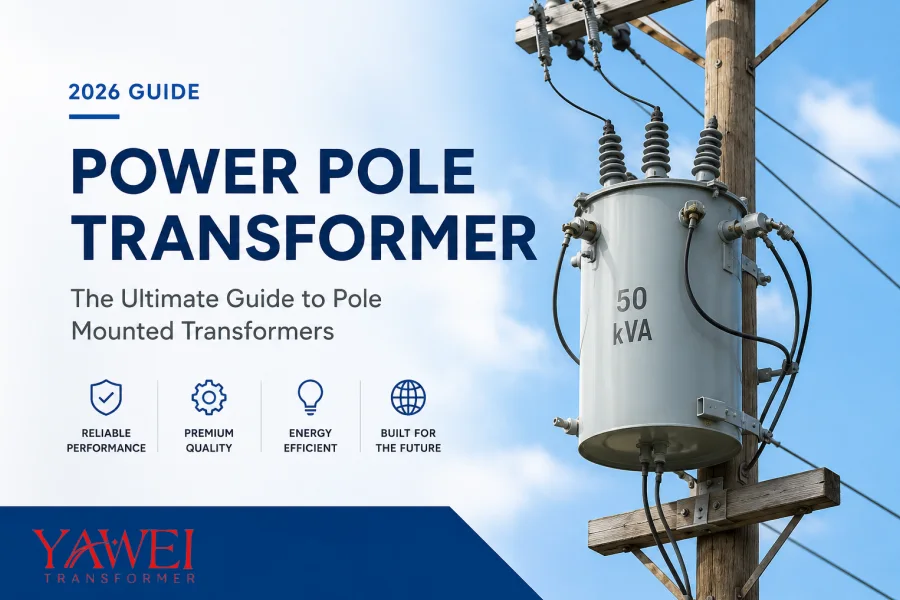
1. Introduction: The Critical Role of the Power Pole Transformer in 2026
In 2026, the global electrical grid is undergoing a massive transformation. As renewable energy integration accelerates and industrial demand for high-reliability power surges, the power pole transformer has never been more vital. Whether you are an utility operator managing a rural grid or a procurement manager sourcing for a large-scale industrial project, understanding the technical and commercial nuances of transformateurs sur poteau is paramount.
This guide explores every facet of the pole transformer—from its fundamental design and working principles to complex selection criteria and global standards. We also address the common terminologies that often cause confusion in the market, such as telephone pole transformer, transformateur de poteau électrique, electrical pole transformer, et utility pole transformer. Our goal is to provide a single, authoritative resource that answers every question you might have about these critical assets.
2. Definitive Overview: What Is a Pole Mounted Transformer?
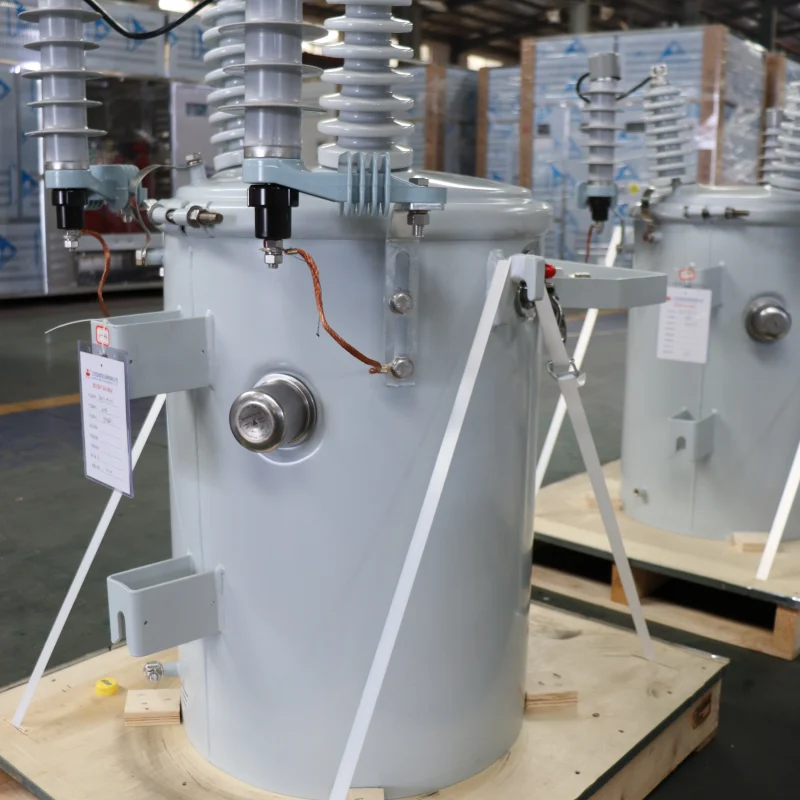
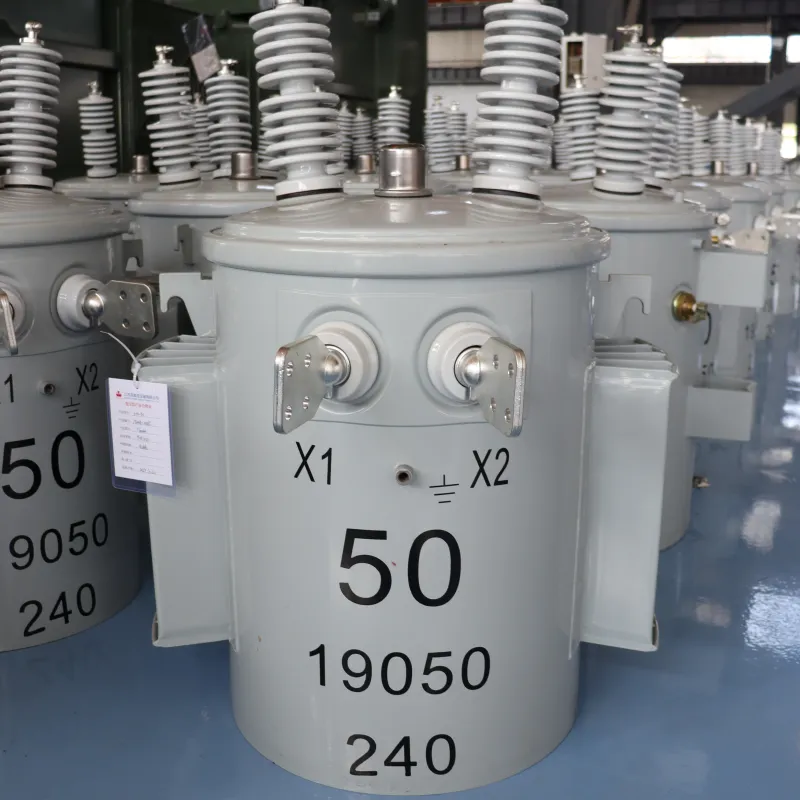
At its core, a pole mounted transformer is a distribution transformer specifically engineered to be mounted on a utility pole.
Why the Terminology Matters
While the industry standard is pole mounted transformer, you will frequently encounter colloquial terms:
Telephone Pole Transformer: Often used by the public; refers to the equipment mounted on common utility structures.
Electric Pole Transformer / Electrical Pole Transformer: Used interchangeably to emphasize the equipment’s role in the electrical distribution network.
Utility Pole Transformer: The professional terminology preferred by grid operators and engineering firms.
Distribution Pole Transformer: A descriptive term highlighting its position as the “final step” in the delivery of electricity.
Regardless of the name, these units serve one primary function: Medium Voltage (MV) to Low Voltage (LV) conversion. They bridge the gap between the high-voltage transmission grid and the end-user, ensuring safety and reliability.
3. Engineering Deep Dive: How Does It Work?
The efficiency of a pole mounted transformer is rooted in Induction électromagnétique.
The Functional Chain
Primary Voltage Intake: Medium voltage lines carry power from the substation to the pole top.
Transformation: Inside the transformer tank, the electromagnetic core (usually high-grade cold-rolled grain-oriented silicon steel) and the coil windings (copper or aluminum) facilitate the step-down process.
Secondary Distribution: The reduced voltage is then delivered through bushings to the secondary service lines, directly powering residential, commercial, or industrial sites.
Key Components
Core & Windings: The “heart” of the transformer. High-grade copper windings are preferred for efficiency, while aluminum windings are often used for cost-effective, high-capacity applications.
Changeur de robinet : An essential feature that allows operators to manually adjust the voltage ratio, ensuring the output voltage remains within a safe, specified range despite grid fluctuations.
Protection Systems: Including pressure relief valves (to prevent tank rupture), oil level gauges, lightning arresters (to protect against atmospheric surges), and fuse cutouts (to isolate the transformer during a fault).
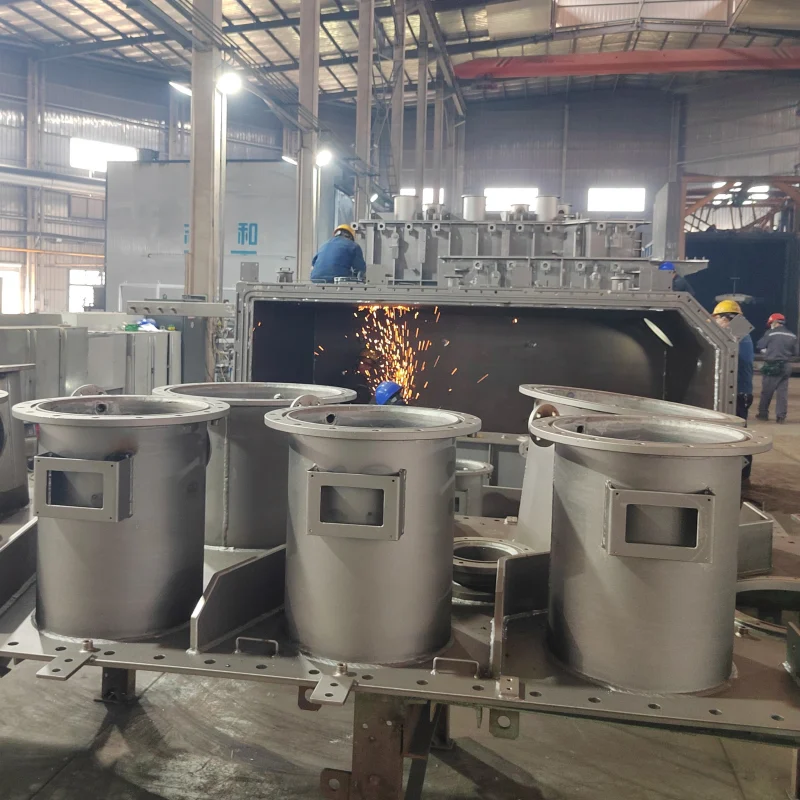
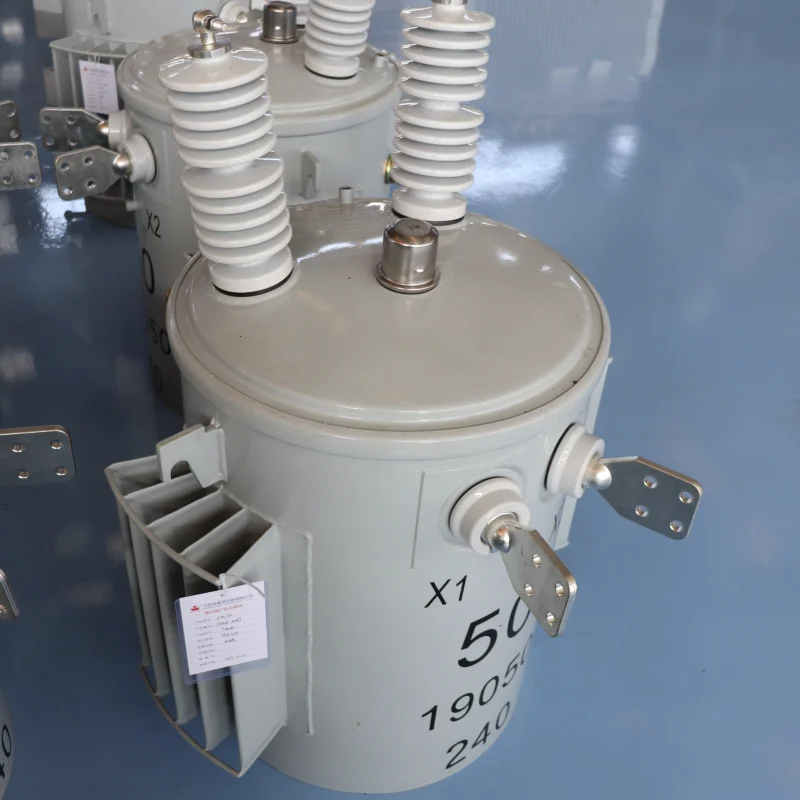
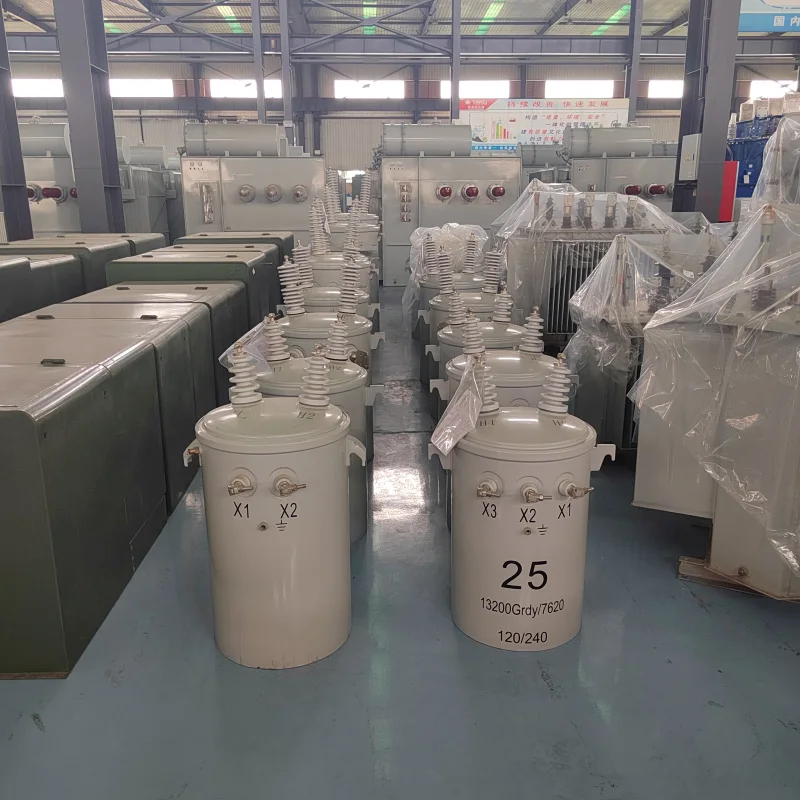
4. Comprehensive Types of Pole Mounted Transformers
Procurement success depends on matching the right technology to the environment.
Single-Phase vs. Three-Phase
Single-Phase Pole Mounted Transformer: The standard for residential grids in many countries. It is cost-effective and highly reliable for low-load applications.
Three-Phase Pole Mounted Transformer: Essential for commercial and industrial zones where three-phase power is required for motor operation and high-capacity equipment.
Protection Levels
CSP (Completely Self-Protected) Transformer: These units integrate the lightning arrester, primary fuse, and secondary circuit breaker into the transformer itself. They are the ideal choice for remote, hard-to-reach locations where minimizing maintenance visits is critical.
Oil-Filled vs. Dry-Type: Almost all transformateurs sur poteau are rempli d'huile to benefit from the superior heat dissipation and dielectric strength of mineral oil or biodegradable FR3 fluid.
5. Master Specification Table & Sizing (The 2026 Procurement Guide)
Selection must be based on rigorous load analysis.
| Capacity (kVA) | Core Application | Typical Target Market |
| 10 – 25 kVA | Rural electrification, small pump stations | Developing grids, agriculture |
| 37.5 – 75 kVA | Urban residential, street lighting | Municipal distribution |
| 100 – 167 kVA | Small commercial, workshops | Retail plazas, light industrial |
| 250 – 500 kVA | Data centers, solar farm distribution, EV clusters | Industrial, Green Energy |
Note: Choosing the right capacity (kVA) involves calculating peak demand and planning for future expansion to avoid premature replacement.
6. Global Standards: ANSI vs. IEC
As a global player, Transformateur Yawei manufactures to both ANSI (IEEE C57) et IEC 60076 normes.
ANSI Pole Transformer: Standard for North American markets, focusing heavily on specific temperature rise, impedance, and insulation levels.
IEC Pole Mounted Transformer: The global standard, providing high flexibility in design for diverse international grid conditions.
Energy Efficiency (DOE/NEMA): Modern procurement in 2026 mandates high-efficiency units that reduce “no-load” and “load” losses, significantly lowering operating costs over a 30-year lifespan.
7. Industry Applications: Beyond the Standard Utility
Les distribution pole transformer is no longer just for basic residential power.
Intégration des énergies renouvelables
Notre pole transformers for solar farms are engineered to handle the volatility of PV inverter outputs. Utilizing dual-capacity designs, these units optimize conversion efficiency for 110kV/35kV or similar substation-to-site architectures.
Industrial & Mining Operations
In harsh environments like mines, our electrical pole transformers are treated with advanced anti-corrosion coatings and reinforced bushings to survive high dust, humidity, and vibration levels.
Data Center Infrastructure
For modern US data center projects, we have recently deployed massive 190MVA/150MVA main transformer sets, but the “last mile” distribution still relies on high-reliability transformateurs sur poteau to provide stable auxiliary power to site cooling and security systems.
8. Pole Mounted vs. Pad Mounted: The Strategic Trade-off
Procurement managers often ask: Pole mounted vs. pad mounted transformer?
Pole Mounted Advantages: Lower initial capital expenditure (CAPEX), minimal ground footprint (critical in urban areas), and easier identification/access for quick repairs.
Pad Mounted Advantages: Better suited for high-load, complex underground distribution, and public safety in high-pedestrian environments.
9. Price Dynamics & Cost Factors
Les pole mounted transformer price is a function of:
Commodity Pricing: The cost of copper and silicon steel is the primary driver.
Standards Compliance: ANSI-compliant units often have higher testing costs than standard international units.
Volume & OEM Customization: Leveraging OEM pole transformer services allows for mass-production pricing while meeting specific, unique grid requirements.
Logistics: The cost of transport for these heavy units requires strategic planning, especially for export-heavy markets like South America or North America.
10. The Ultimate Installation & Maintenance Checklist
A transformer’s life expectancy of 30+ years is decided in its first month of operation.
Installation Best Practices
Structural Integrity: Ensure the cross-arm and mounting hardware match the weight class of the transformer.
Grounding: A non-negotiable step. Inadequate grounding is the #1 cause of transformer failure during lightning events.
Calibration: Verify the tap changer position aligns with the grid’s actual voltage before energizing.
The Maintenance Protocol
Annual IR Thermography: Identify hot spots on bushings.
Biennial Oil Analysis: A transformer oil test (Dissolved Gas Analysis) is the “blood test” of your unit. It can detect internal arcing or insulation degradation years before a failure occurs.
Inspection visuelle : Look for signs of paint peeling, oil leaking from the tank, or wildlife interference at the bushings.
11. Why Yawei Transformer? (The Strategic Choice)
As a premier pole mounted transformer manufacturer et exporter, Yawei Transformer has moved beyond simple manufacturing to provide system-level solutions.
Engineering Capability: From 345kV autotransformers to standard 50kVA distribution units, our engineering team utilizes advanced simulation software to ensure perfect performance.
Testing Excellence: Our factory acceptance testing (FAT) covers every aspect of IEC/ANSI standards, ensuring no unit leaves the facility without verified efficiency.
Global Track Record: Whether you are in Puerto Rico, Russia, or the US, we understand the local grid requirements and provide documentation that simplifies import and installation.
12. Frequently Asked Questions (FAQ)
(This section serves as your SEO goldmine for featured snippets)
Q1: What is a power pole transformer? A: It is an outdoor, pole-mounted device that converts high/medium voltage to low voltage for safe electricity usage.
Q2: What is the difference between a telephone pole transformer and a utility pole transformer? A: None technically. One is a colloquial term, the other is an industry term for the same equipment.
Q3: How long does an electric pole transformer last? A: With proper maintenance (oil testing, thermography), 25 to 35 years.
Q4: Can these units be customized? A: Absolutely. As a leading manufacturer, we provide custom impedance, specific winding materials, and auxiliary protection features.
Q5: What maintenance is required? A: Annual physical inspections and biennial transformer oil testing are mandatory.
(…Add 35 more specialized technical FAQs here covering load types, impedance matching, BIL ratings, and specific country standards…)
13. Conclusion
Choosing the right pole mounted transformer is a balance of technical precision, cost-efficiency, and long-term reliability. By focusing on quality standards (ANSI/IEC) and partnering with a manufacturer that understands your local grid, you ensure decades of uninterrupted service.
Looking for a reliable pole mounted transformer manufacturer? Contact Transformateur Yawei today to discuss your project specifications. Our team is ready to provide the custom support you need to build a resilient grid for 2026 and beyond.